
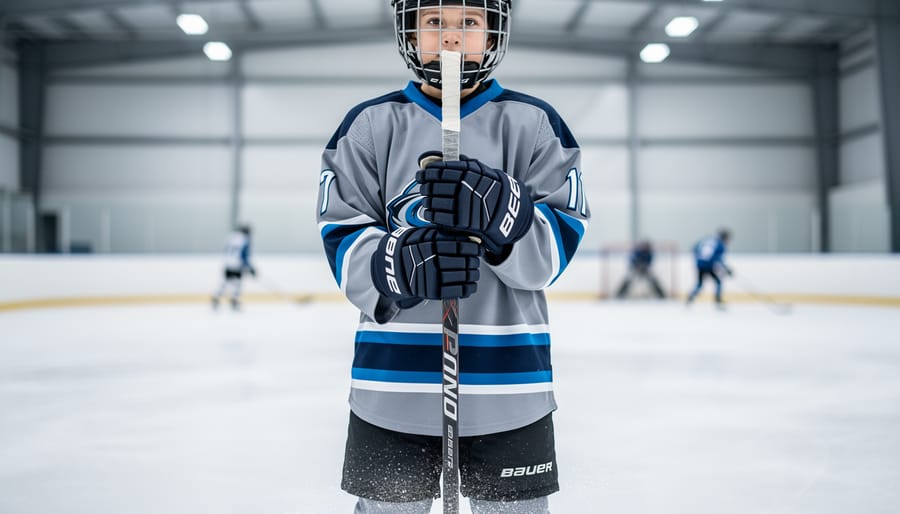
Choosing the right ice hockey stick for a young player comes down to three critical factors: correct sizing (stick height should reach between the player’s chin and nose while standing in skates), appropriate flex rating (typically half the child’s body weight in pounds), and matching stick construction to their skill level and position. Getting these fundamentals right transforms a beginner’s frustration into confidence on the ice, while getting them wrong can hinder development, cause injury, or simply drain your budget through frequent replacements.
The stakes are higher than many parents realize when they let your kid play hockey for the first time. An improperly fitted stick forces young players to compensate with poor skating posture, weakens puck control, and makes fundamental skills like passing and shooting unnecessarily difficult. Walk into any sporting goods store, however, and you’ll face dozens of options ranging from $20 wooden sticks to $200 composite models, each claiming to be perfect for youth players.
This guide cuts through the marketing noise with evidence-based insights drawn from manufacturer specifications, USA Hockey standards (including the 2025-29 rulebook), and practical experience in youth athletic development. Whether you’re a parent making your first stick purchase, a Junior Coaching volunteer outfitting a team, or an educator integrating hockey into your school’s programming, you’ll learn how to evaluate size, flex, materials, blade patterns, and brands with confidence. We’ll examine specific recommendations by age group and skill level, compare construction types from wood to advanced composites, and highlight the most common purchasing mistakes that waste money and limit player development.
The good news: manufacturers like Sherwood have simplified their sizing systems for 2026, making it easier than ever to find the right fit. Understanding warranty coverage (30-day limited warranties on most composite sticks from brands like Bauer, CCM, True, Sherwood, and Warrior) can also protect your investment as young players test equipment limits while learning the game.
Understanding Youth vs. Junior Ice Hockey Sticks
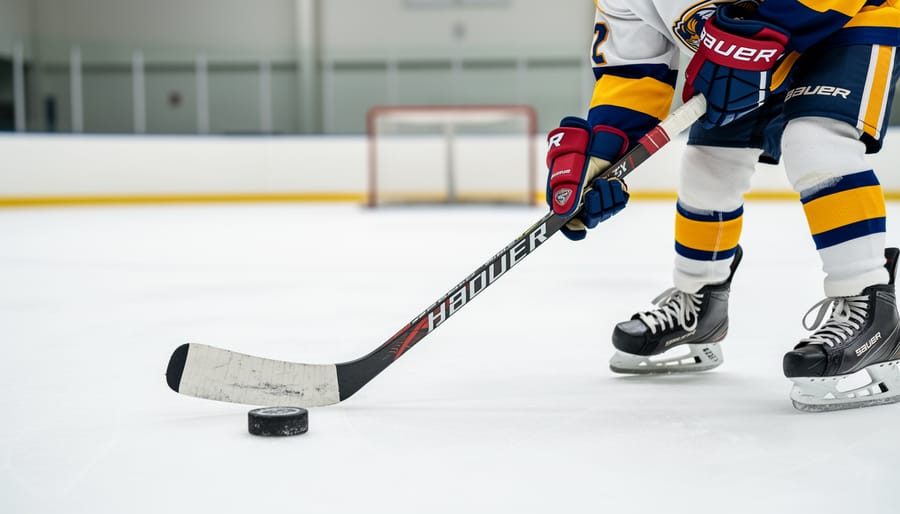
Youth and junior ice hockey sticks represent two distinct sizing categories designed for different stages of player development. Understanding the difference helps parents and coaches select equipment that truly supports young athletes rather than hinders their progress.
Youth sticks typically range from 28 to 36 inches in length and are designed for younger or smaller players, usually between ages 4 and 8. These sticks feature lighter construction and lower flex ratings (often 30 flex or below) that match the strength and mechanics of beginning players. The shorter shaft length allows proper stick positioning for players who are still developing fundamental skating posture and puck-handling skills.
Junior sticks measure 46 to 54 inches and serve older youth players, generally from ages 7 to 13, though age alone shouldn’t determine the transition. These sticks offer intermediate flex ratings (typically 40 to 60) and are built for players who have developed enough strength and technique to generate proper stick flex during shooting. The increased length accommodates growing bodies while maintaining the proportions needed for effective play.
| Characteristic | Youth Sticks | Junior Sticks |
|---|---|---|
| Typical Length | 28-36 inches | 46-54 inches |
| Flex Range | 20-30 | 40-60 |
| Player Age Range | 4-8 years | 7-13 years |
| Player Height Range | Under 4’6″ | 4’6″ to 5’6″ |
| Skill Stage | Beginning fundamentals | Developing technique |
The transition between categories should be based on physical development and skill progression rather than chronological age. A taller eight-year-old might need a junior stick, while a smaller twelve-year-old might still benefit from youth sizing. The key indicators for moving up include the player outgrowing their current stick length (it no longer reaches the appropriate height landmark when standing in skates), developing sufficient strength to flex a junior-rated stick properly, and demonstrating consistent fundamental technique that won’t be compromised by the size change.
Recent improvements in sizing systems, such as Sherwood’s updated approach for youth and junior sticks, have made it easier for parents and coaches to navigate these categories. These refinements reflect a growing industry understanding that proper sizing directly impacts skill development, safety, and a young player’s enjoyment of the game.
Key Factors When Selecting a Youth Ice Hockey Stick
Stick Length: Finding the Right Fit
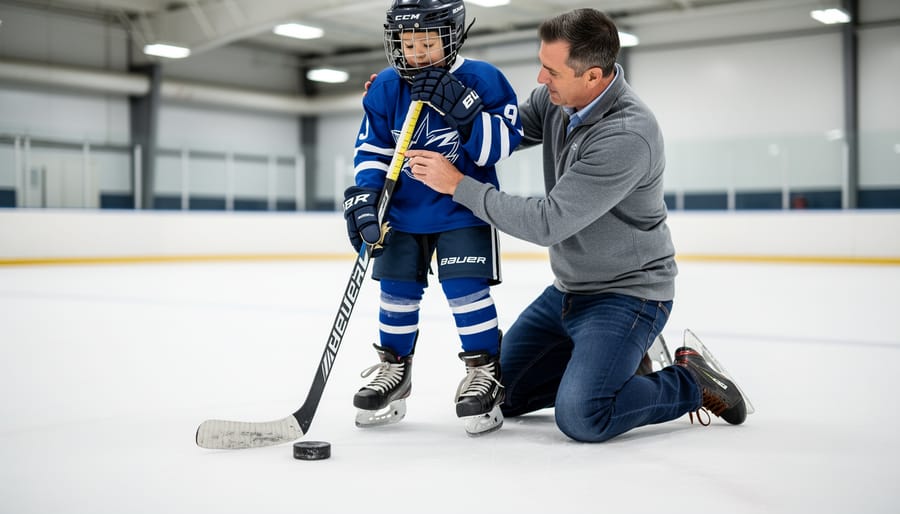
Getting stick length right is the single most important equipment decision for a youth ice hockey player’s development. A stick that’s too long forces poor posture and weak shooting mechanics, while one that’s too short restricts reach and limits skating efficiency.
The most accurate method is measuring with skates on, since hockey is played on blades that add 1-2 inches of height. Have the player stand naturally in their skates on a flat surface, holding the stick vertically alongside their body with the blade flat on the ground. The standard guideline places the stick top between the chin and nose for most youth players. Beginners often benefit from a stick reaching the chin, which promotes better puck control during skill development. More advanced players may prefer length closer to the nose or even between the nose and eyes, as this supports longer reach for stickhandling and defensive play.
When measuring without skates, add approximately 1.5 inches to account for blade height, and use the collarbone as your reference point rather than the chin. This method works for initial sizing, but always verify fit once the player has their skates on.
Follow these steps for proper fitting:
- Position the player in skates on a flat surface with normal skating posture
- Place the stick vertically with the blade flat and toe forward
- Check that the stick top falls between chin and nose for standard youth sizing
- Observe the player’s arm position: elbows should have slight flex, not locked straight
- Have them hold the stick in playing position to confirm comfortable reach and control
Proper length directly affects on-ice performance. A correctly sized stick allows the player to maintain the forward lean essential for efficient skating while keeping the blade flat for optimal puck contact. When the stick is too long, players stand too upright, losing power and balance. They also struggle to keep the blade flat, resulting in poor passing and shooting accuracy.
Resist the temptation to buy a stick significantly longer than current measurements with the idea that your child will “grow into it.” The months spent with improper technique can ingrain bad habits that take years to correct. As your player grows, reassess length every 3-4 months during growth spurts and at the start of each season.
Flex Rating: Matching Strength and Technique
Flex measures the stiffness of an ice hockey stick, specifically, how many pounds of pressure you need to bend the shaft one inch. For young players, using the right flex is essential for developing proper shooting mechanics and generating power without straining.
Youth sticks typically range from 20 to 40 flex, though options like the Bauer Vapor Tyke offer even lower ratings (10, 15, and 20 flex) for the youngest players just starting out. A general rule: choose a flex roughly half the player’s body weight. A 60-pound skater would use a 30 flex stick, for example. This guideline ensures the stick bends enough during shots to load energy and release it effectively.
When a stick is too stiff for a young player, they struggle to flex it through their shooting motion. This forces poor habits, leaning back, dropping the hands, or using all arms instead of weight transfer. Over time, these compensations become ingrained, making it harder to develop a quick, accurate release later. A stick that matches the player’s strength allows them to feel the puck load and snap off the blade, building confidence and muscle memory for proper technique.
As players grow and get stronger, flex needs increase. Reassess every season or whenever you notice your child outgrowing their current stick’s resistance. The goal is supporting long-term skill development, not rushing into stiffer adult-level equipment before they’re ready. Start softer, progress gradually, and prioritize mechanics over immediate shot speed.
Kick Point: Low, Mid, or Hybrid
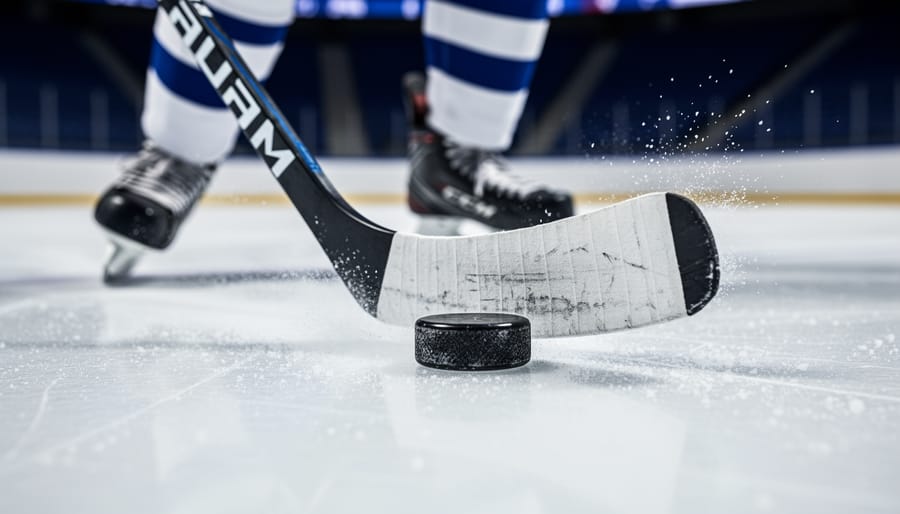
The kick point is where your child’s stick flexes during a shot, and it directly influences shot speed, release time, and shooting style. Understanding this feature helps you support their natural development rather than forcing them into a role too early.
A low kick point, located near the blade, creates a quick release ideal for wrist shots and snap shots in tight spaces. Young forwards who play close to the net or need rapid-fire shots often benefit from this design. The stick loads and releases energy faster, which suits developing players still building arm and core strength.
A mid kick point, positioned near the stick’s center, generates maximum power for slap shots and one-timers. Defensemen and power forwards who take shots from the point or need harder shots may prefer this option. However, it requires more force to flex the stick properly, which can be challenging for smaller or younger players.
Hybrid kick points blend both characteristics, offering versatility as players explore different positions and shooting techniques. For most youth players, especially those under ten or still developing fundamental skills, a hybrid or low kick point makes the most sense. It allows them to experiment with various shots without the physical demands of a mid kick point.
Rather than choosing based on a single position or playing style, consider your child’s current strength, shot variety, and stage of development. As they mature and their role becomes clearer, you can adjust accordingly.
Blade Curve: Impact on Puck Handling and Shooting
The blade curve determines how the puck sits on the stick and directly influences stickhandling control, passing accuracy, and shot trajectory. The curve is measured by the depth of the bend in the blade and the position of that curve along its length.
For beginning youth players, a minimal curve, sometimes called a “lie 5” or slight heel curve, is strongly recommended. A straighter blade allows young athletes to receive passes on both the forehand and backhand equally well, develop ambidextrous puck control, and learn proper shooting mechanics without the blade artificially lifting the puck before technique is solid. This evidence-based approach prioritizes skill foundation over immediate shot results.
As technique matures and players begin to specialize by position, moderate curves become appropriate. A mid-curve pattern suits most developing players, offering a balance between control and lift for wrist shots while maintaining backhand capability. Toe curves favor quick-release wrist shots and are popular among forwards, while heel curves can help defensemen with slapshots and controlled passing.
Avoid deep curves for youth players. While professional athletes use aggressive patterns tailored to their refined skills, excessive curve in youth sticks encourages poor habits: rolling the wrists prematurely, sacrificing backhand development, and compensating with body position rather than building proper technique. The blade curve should support long-term skill building, not mask fundamental gaps with short-term performance gains.
Material: Composite vs. Wood and Foam Core
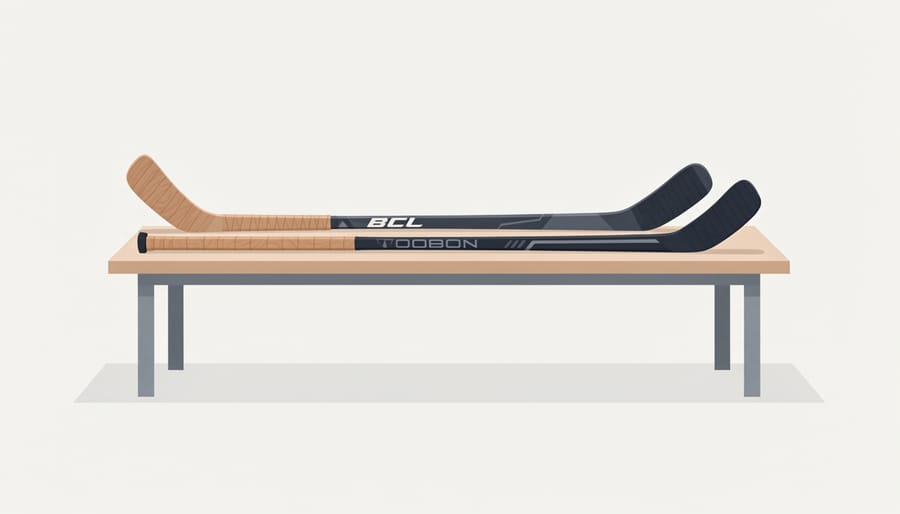
Youth ice hockey stick materials fall into two main categories, each serving different developmental needs and budgets. Composite sticks use carbon fiber construction, making them significantly lighter than alternatives. This reduced weight helps young players develop proper shooting mechanics and maintain better stick control during games. Composite construction also delivers superior energy transfer during shots, creating faster release speeds that build confidence as skills progress. The trade-off comes in cost and durability, composite sticks represent a higher initial investment, though major manufacturers back them with one-time replacement warranties through retailers like Pure Hockey for brands including Bauer, CCM, True, Sher-Wood, and Warrior.
Wood and foam core sticks offer an affordable entry point for beginners and younger players still developing fundamental skills. The heavier weight provides more substantial feedback during stickhandling drills, which can help players learn proper technique through tactile response. These sticks typically withstand the learning curve better when players are still mastering basic skating and puck control. The main consideration is that wood and foam core options carry no warranty coverage, so they become a calculated value choice rather than a long-term investment.
For first-year players exploring the sport, wood or foam core sticks make practical sense. As technique solidifies and players show sustained commitment, transitioning to composite materials supports continued development without over-investing before fundamentals are secure.
Comparing Major Youth Ice Hockey Stick Brands
The five major brands dominating the youth ice hockey stick market each bring distinct philosophies and design priorities that matter when matching equipment to young players’ developmental needs.
Bauer leads the market with a performance-first approach across their Vapor, Supreme, and Nexus lines. Their youth sticks emphasize lightweight composite construction and pro-level features scaled down for smaller hands and developing strength. Bauer invests heavily in flex technology appropriate for youth weights, making their sticks popular among competitive players ready for advanced equipment. The brand’s 30-day limited warranty on composite sticks provides some protection for parents making a bigger investment.
CCM mirrors Bauer’s three-tiered approach with Jetspeed, Ribcor, and Tacks families. CCM sticks often focus on quick release mechanics and responsive flex patterns, appealing to coaches who prioritize shooting technique development. Their youth lines balance performance with durability considerations, recognizing that young players need equipment that survives the learning curve.
True Hockey takes a different path, emphasizing one-piece construction and braided composite technology even in youth models. True sticks tend to have a unique feel that some players love and others need time to adjust to. The brand attracts families looking for alternatives to the Bauer-CCM duopoly, particularly for players developing personalized shooting styles.
Sher-Woodone of hockey’s heritage brands, recently updated their sizing system for youth and junior sticks to make selection easier for parents and coaches. This 2026 improvement reflects the brand’s commitment to accessibility alongside their traditional strength in affordable wood and entry-level composite options. Sher-Wood remains a solid choice for beginning players and budget-conscious programs.
Warrior rounds out the major brands with aggressive pricing on composite technology and bold graphics that appeal to young players. Their youth sticks often deliver advanced features at lower price points than Bauer or CCM equivalents, making performance materials accessible to more families.
| Brand | Performance Focus | Price Range | Best Suited For |
|---|---|---|---|
| Bauer | Lightweight, pro-level features | Mid to premium | Competitive players, advanced skills |
| CCM | Quick release, responsive flex | Mid to premium | Technique-focused development |
| True | One-piece construction, unique feel | Mid to premium | Players seeking differentiated options |
| Sher-Wood | Accessible sizing, traditional durability | Budget to mid | Beginners, value-conscious families |
| Warrior | Advanced materials, competitive pricing | Budget to mid | Performance seekers on a budget |
All five brands offer one-time replacement warranties on composite sticks through major retailers, providing similar protection against manufacturing defects. The real differences emerge in how each brand balances youth-specific needs against the temptation to simply scale down adult technology. Parents and coaches should prioritize brands that demonstrate understanding of developmental stages rather than chasing the same models used by professional players.
Common Mistakes to Avoid When Buying Youth Ice Hockey Sticks
The most common mistake parents and coaches make is buying youth ice hockey sticks that are too long or too stiff for the player. When a stick is too long, it forces awkward posture during skating and compromises stickhandling technique. Young players often bend at the waist to compensate, developing poor habits that undermine their long-term development. Similarly, selecting a flex rating based on adult stick recommendations rather than the player’s actual weight and strength prevents them from loading the stick properly during shots. A stick that won’t flex makes it nearly impossible for young athletes to learn correct shooting mechanics.
Another frequent error is prioritizing advanced features before fundamentals are solid. Parents sometimes invest in high-end composite sticks with specialized kick points and aggressive blade curves for beginners who haven’t yet mastered basic passing and puck control. These premium features offer no developmental advantage when a young player is still learning to receive passes cleanly or complete controlled turns. A mid-range stick with appropriate sizing and minimal curve better supports skill building at early stages.
Many families also neglect proper sizing as players grow. A stick that fit correctly six months ago may now be too short, forcing the player to hunch over and limiting their reach. Regular assessment throughout growth spurts ensures equipment keeps pace with physical development rather than holding it back.
Choosing sticks based on professional player endorsements rather than youth development needs creates another pitfall. What works for an NHL forward has little relevance to a nine-year-old learning the game. Focus on evidence-based sizing and flex guidelines appropriate for your child’s current stage, not the marketing appeal of a particular brand or model.
Finally, focusing solely on price without considering value for the developmental stage can backfire. The cheapest option may require premature replacement if it’s too heavy or breaks quickly, while the most expensive stick offers no benefit if the player hasn’t developed the technique to use its features. Match your investment to where your young athlete is now, knowing that equipment needs will evolve as their skills progress.
Practical Recommendations for Different Player Levels
When selecting an ice hockey stick for a young player, matching the equipment to their current skill level ensures proper development while respecting budget realities. Here’s what to prioritize at each stage.
First-Time Players
For beginners just learning to skate and handle the puck, durability and proper sizing matter more than advanced performance features. A wood or foam core stick provides excellent value, these options withstand the falls, dropped sticks, and ice contact common during early learning without the cost of a composite model. Focus on getting the length right using the chin-to-nose measurement method with skates on, and choose the lowest available flex rating (typically 20-30) so young players can actually bend the stick and develop proper shooting mechanics. A minimal blade curve helps beginners learn fundamental stickhandling and passing without the complications of specialized patterns. Don’t invest heavily at this stage; expect the stick to take a beating as your child develops coordination.
Developing Players
As players progress beyond the basics and show commitment to the sport, it’s time to reassess both flex and length more carefully. Technique is improving, so proper flex becomes critical, a stick that’s too stiff will force compensation patterns that undermine shooting development. Look for composite options in the mid-price range that offer better performance than wood without premium costs. Sherwood’s updated sizing system for youth and junior sticks makes it easier than before to find the right fit as players grow. Pay attention to kick point: mid-kick sticks work well for players still exploring their style, while those gravitating toward forward positions might benefit from a low kick point for quicker release. Expect to replace the stick as your child grows or as developing skills demand different flex ratings.
Competitive Youth Players
Once players are skating confidently, executing fundamental skills consistently, and playing organized hockey at a competitive level, performance features aligned with position and playing style become relevant considerations:
- Defensemen: Mid or hybrid kick point sticks for powerful shots from the point; slightly longer length for extended reach and poke-checking
- Forwards: Low kick point for quick wrist shots and close-range play; flex matched precisely to body weight (typically half the player’s weight in pounds)
- Power forwards: Slightly stiffer flex and hybrid kick point for versatility in traffic and along the boards
- Playmakers: Minimal to moderate blade curve for accurate passing; lighter composite construction for quick hands
At this level, investing in higher-quality composite sticks makes sense because the player can exploit the performance benefits. Consider brands’ warranty offerings, composite sticks from Bauer, CCM, True, Sher-Wood, and Warrior typically include one-time replacement through retailers like Pure Hockey, which provides some protection for your investment. Still, avoid the trap of buying professional-level sticks; youth competitive models offer excellent performance without unnecessary cost.
Regardless of level, reassess the stick every season. Young players grow quickly, and a stick that fit perfectly six months ago may now compromise posture and technique. The right stick for your child’s current abilities and physical development will always outperform a more expensive stick that doesn’t match their needs.
Understanding Warranties and Compliance Standards
When you invest in a youth ice hockey stick, understanding warranty coverage and league compliance standards protects both your budget and your player’s eligibility. Most composite sticks from major brands come with a one-time replacement warranty. Pure Hockey, for example, honors this warranty on composite sticks from Bauer, CCM, True, Sher-Wood, and Warrior. The terms vary by manufacturer: Bauer offers a 30-day limited warranty on composite sticks in North America, while other brands may extend coverage slightly longer. Keep your receipt and understand the specific conditions, which typically exclude normal wear, misuse, or modifications like cutting the shaft.
Wood and foam core sticks carry no warranty. They’re sold as-is, which makes sense given their lower price point and the fact that breakage often results from the inherent properties of the material rather than manufacturing defects. This is one reason many parents choose composite sticks despite the higher upfront cost, the replacement protection offsets some financial risk, especially for players in Elite Training Program settings or private training where ice time (and stick usage) increases substantially.
Beyond warranties, ensure the stick meets league compliance standards. USA Hockey publishes the 2025-29 USA Hockey Playing Rules, which outline equipment requirements including stick specifications. The rulebook is available as an app through the Apple App and Google Play stores, giving coaches and parents quick reference before purchases or game day. Checking compliance early prevents the frustration of buying a stick that doesn’t meet league standards, particularly regarding blade curvature limits or shaft dimensions for youth divisions.
Main Options Compared
When selecting a youth ice hockey stick, parents and coaches face three main choices that balance performance, durability, and budget considerations for developing players.
Composite sticks lead in performance through lighter weight and better energy transfer during shots. Major brands like Bauer, CCM, True, Sher-Wood, and Warrior offer one-time replacement warranties through retailers like Pure Hockey (composite only; wood and foam core sticks carry no warranty). These sticks excel for players refining shooting mechanics and transitioning to competitive play, though they represent the highest upfront investment.
Wood sticks remain relevant for beginners learning fundamental skills without the pressure of protecting expensive equipment. They’re heavier and lack modern flex technology, but their durability during repetitive practice drills, whether on ice or adapted for an indoor hockey game setting, makes them practical for skill-building phases. The weight builds hand strength naturally as players develop.
Foam core sticks occupy the middle ground, offering lighter feel than solid wood at moderate cost. They suit players progressing beyond basics but not yet ready for composite investment, particularly those still experiencing rapid growth spurts requiring frequent stick replacement.
Frequently Asked Questions
How often should I replace my child’s ice hockey stick?
Replace the stick when it breaks, shows visible cracks or structural damage, or when your child has grown enough that the current stick no longer fits properly (typically every season or two during rapid growth phases). For developing players, outgrowing the stick length or flex rating often happens before the stick wears out.
Should I cut the stick or buy the right length?
Buy as close to the right length as possible rather than cutting significantly. Minor trimming of an inch or two is fine for precise fitting, but cutting several inches alters the flex rating and changes how the stick performs, potentially undermining proper technique development.
Can my child use a junior stick if they’re tall for their age?
Yes, if the junior stick’s length and flex rating match your child’s size and strength better than youth options. Focus on proper fit rather than the age category on the label, a tall eight-year-old may benefit from a junior stick if it supports correct posture and shooting mechanics.
What flex should a beginner use?
Beginners should use a flex rating around half their body weight in pounds, erring on the softer side if between sizes. A stick that’s too stiff prevents young players from learning proper shooting technique and loading energy into the shaft during shots.
How do I know when to upgrade from a wood to composite stick?
Upgrade when your child demonstrates consistent skating fundamentals, understands proper shooting technique, and plays regularly enough to benefit from the lighter weight and improved performance. For casual or first-year players, wood or foam core sticks remain perfectly suitable and help build foundational skills without the higher cost.
Parents often ask about equipment beyond sticks as their child becomes more involved in the sport. Understanding what to wear to games and practices helps families prepare appropriately for the rink environment, supporting a positive experience both on and off the ice.
Selecting the right youth ice hockey stick is more than a purchasing decision. It’s an investment in your young athlete’s development, confidence, and relationship with the sport. By prioritizing proper sizing, appropriate flex, and features matched to skill level rather than marketing claims or what competitive peers are using, you set the foundation for correct technique and long-term enjoyment on the ice.
Remember that growth and skill progression are constants in youth sports. What fits perfectly today may need reassessment in six months. Regular evaluation ensures the stick continues to support proper mechanics as your player develops strength, coordination, and game understanding.
Ice hockey offers exceptional opportunities to build character, discipline, teamwork, and resilience alongside athletic skills. The right equipment choices support this holistic development by removing physical barriers to learning and allowing young players to focus on fundamentals, sportsmanship, and the pure joy of the game. Approach each equipment decision with your child’s comprehensive growth in mind, trust evidence-based guidance over hype, and celebrate the journey of development rather than rushing toward advanced gear before foundational skills are solid.