
The junior hockey pyramid stands as one of sport’s most competitive structures, yet its true measure of success extends far beyond wins and championship banners. Every year, thousands of young players climb through levels ranging from house league foundations to elite tier programs, but fewer than one percent will reach professional hockey. This stark reality demands a fundamental shift in how coaches, parents, and educators approach the journey.
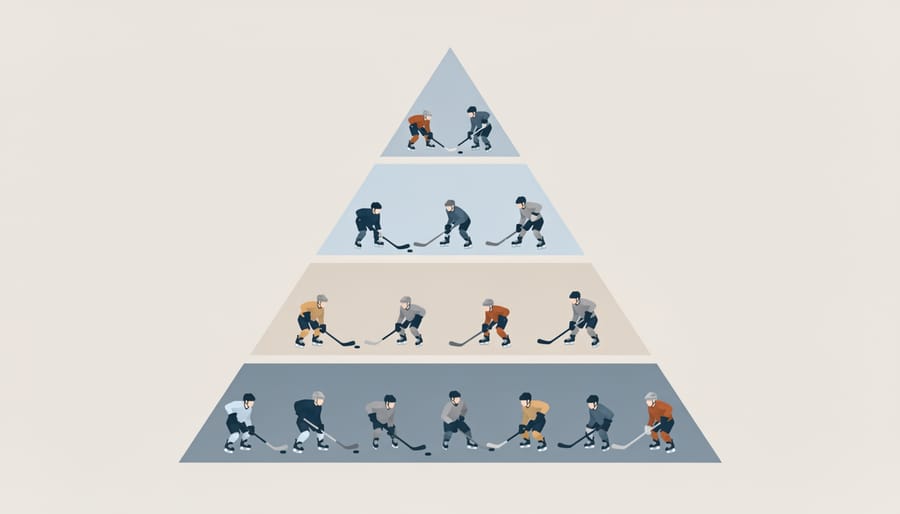
Understanding this pyramid structure reveals both opportunity and challenge. At its base, recreational programs welcome all participants, building fundamental skills and passion for the game. Moving upward through AA, AAA, and junior levels, competition intensifies dramatically, with each tier filtering players based on skill, commitment, and physical development. The narrowing structure creates immense pressure that can either forge character or compromise it, depending on the guidance young athletes receive.
The critical question isn’t whether your player will reach the pyramid’s peak, but rather who they will become during the climb. Research consistently demonstrates that youth sports participation builds resilience, leadership, and teamwork, but only when adults prioritize holistic development over short-term competitive outcomes. The hockey pyramid becomes destructive when families sacrifice education, mental health, and family relationships chasing unlikely professional dreams.
This article examines how stakeholders can navigate the junior hockey system while maintaining focus on character development, academic achievement, and personal growth. Evidence-based strategies will empower you to help young athletes thrive at every level, regardless of how high they climb.
Understanding the Junior Hockey Pyramid Structure
How Players Move Through the Levels
Young players typically begin their hockey journey in house league programs between ages 5-8, where the focus is on fundamental skating skills, basic puck handling, and most importantly, developing a love for the game. These recreational leagues emphasize participation over competition, ensuring every child receives equal ice time regardless of ability.
As skills progress, players around ages 9-12 may transition to select or competitive travel teams, which require tryouts and demonstrate higher skill levels. These programs involve more structured practices, weekend tournaments, and increased commitment from families. Coaches assess skating speed, hockey sense, and coachability during evaluations.
The elite tiers, including AAA and junior leagues, typically emerge around ages 13-18. These highly competitive levels demand exceptional skating ability, advanced tactical understanding, and significant time investment. Research shows that only 5-10% of youth players reach these upper pyramid levels, making it essential for families to maintain realistic expectations.
Movement between levels isn’t always linear. Players may move up or down based on physical development, skill acquisition, or personal circumstances. The healthiest approach views this progression as an opportunity for growth rather than a definitive measure of worth, recognizing that character development and educational priorities remain paramount regardless of competitive tier.
The Pressure Points in the Pyramid
The junior hockey pyramid creates distinct pressure points where young athletes face pivotal moments that test not just their skills, but their character and resilience. The most intense selection pressure typically occurs during three critical transitions: the move from house league to competitive travel teams (ages 9-11), the jump to elite programs like AAA hockey (ages 13-15), and the final push toward junior leagues (ages 16-18).
Research shows that approximately 70% of youth hockey players experience at least one significant cut or demotion during their development journey. These moments often coincide with crucial academic years, creating compounded stress for young athletes balancing school responsibilities with athletic ambitions. The pressure intensifies as the pyramid narrows, with only 1-2% of youth players ultimately reaching junior A or major junior levels.
Understanding these pressure points helps parents and coaches provide targeted support when it matters most. Rather than viewing cuts as failures, evidence-based approaches reframe these experiences as opportunities for building resilience, developing alternative pathways, and reinforcing that athletic worth doesn’t define personal value. Creating open communication channels during these transitional periods ensures young athletes maintain healthy perspectives and continue their holistic development regardless of where they land within the pyramid structure.
Where the Pyramid Fails Character Development
The Win-at-All-Costs Trap
When the primary focus becomes advancing through hockey’s competitive levels at any cost, young athletes can inadvertently lose sight of the foundational values that create lasting success both on and off the ice. This trap emerges subtly, often with the best intentions from parents and coaches who genuinely want to support their players.
Consider a talented 14-year-old who secures a roster spot on an elite AAA team. The increased pressure to perform might lead him to skip reporting a minor concussion, fearing he’ll lose playing time. Or imagine a dedicated athlete who begins viewing teammates as competition rather than collaborators, hesitating to celebrate their goals or share practice insights. These scenarios reflect how an overemphasis on results can erode the very character traits that hockey should cultivate.
Research in youth sports psychology demonstrates that athletes who experience excessive pressure focused solely on outcomes often struggle with increased anxiety, decreased intrinsic motivation, and reduced enjoyment of their sport. When advancement becomes the singular measure of success, young players may lose opportunities to develop resilience through healthy setbacks or learn teamwork through collaborative problem-solving.
The most concerning aspect isn’t the ambition itself, which remains valuable and necessary. Rather, it’s when that ambition operates in isolation from values like integrity, respect, and personal responsibility. A player who advances to higher levels without these foundations may achieve short-term success but often lacks the character strength needed for sustainable achievement in hockey and life beyond the rink.
When Selection Replaces Development
The junior hockey pyramid often creates an environment where selection takes priority over genuine player development, leading to concerning consequences for young athletes’ psychological well-being. When teams focus primarily on identifying and retaining only the most immediately talented players, they inadvertently communicate a damaging message: you either have what it takes right now, or you don’t belong here.
This selection-first approach directly impacts young athletes’ self-worth. Research in youth sports psychology demonstrates that early cutting and repeated rejections can create lasting emotional scars, causing players to internalize failure as a permanent character trait rather than a temporary stage in their development journey. When a 13-year-old hears they’ve been cut from a team, they rarely think, “I need more practice.” Instead, they often conclude, “I’m not good enough,” or worse, “I’ll never be good enough.”
The learning opportunities lost through premature selection cannot be overstated. Players who might bloom later—the so-called late developers—never receive the coaching, ice time, and competitive experience they need to reach their potential. Meanwhile, those who are selected early may develop complacency, believing their current abilities guarantee future success without continued effort.
Perhaps most critically, this system cultivates fixed mindsets rather than growth mindsets. Carol Dweck’s groundbreaking research shows that young people who believe their abilities are predetermined perform worse over time than those who understand that skills develop through dedication and practice. When hockey organizations prioritize selection over development, they inadvertently teach young athletes that talent is innate and unchangeable, undermining the very resilience and work ethic that defines successful athletes and citizens alike.
Building Character Within the Pyramid: A Better Approach
Redefining Success at Every Level
True success in junior hockey extends far beyond the scoreboard. At every level of the pyramid, coaches and parents can implement meaningful metrics that honor the complete athlete. Research shows that recognizing effort and improvement builds intrinsic motivation more effectively than focusing solely on outcomes.
At grassroots levels, celebrate individual skill progression through personalized goal-setting journals where players track specific improvements in skating, stickhandling, or positioning. Create monthly awards for leadership qualities like encouraging teammates, demonstrating resilience after mistakes, or showing exceptional sportsmanship during challenging games.
For competitive tiers, incorporate character assessments into player evaluations alongside physical performance. Coaches can measure communication skills during team meetings, accountability in practice attendance and preparation, and how athletes support teammates during both victories and setbacks.
Parents play a crucial role by reframing post-game conversations. Instead of asking “Did you win?” try “What did you learn today?” or “How did you help your team?” This subtle shift reinforces that growth happens in multiple dimensions.
Elite levels should maintain this holistic perspective by recognizing academic achievements, community involvement, and mentorship of younger players. When young athletes understand that their worth transcends statistics, they develop the emotional intelligence and character that serves them throughout life, whether they reach professional hockey or pursue other paths.
Teaching Resilience Through Setbacks
Disappointments in hockey—whether team cuts, lineup demotions, or championship losses—represent pivotal teaching moments when approached with intentionality. Research shows that young athletes who learn to reframe setbacks develop stronger mental resilience and long-term success, both on and off the ice.
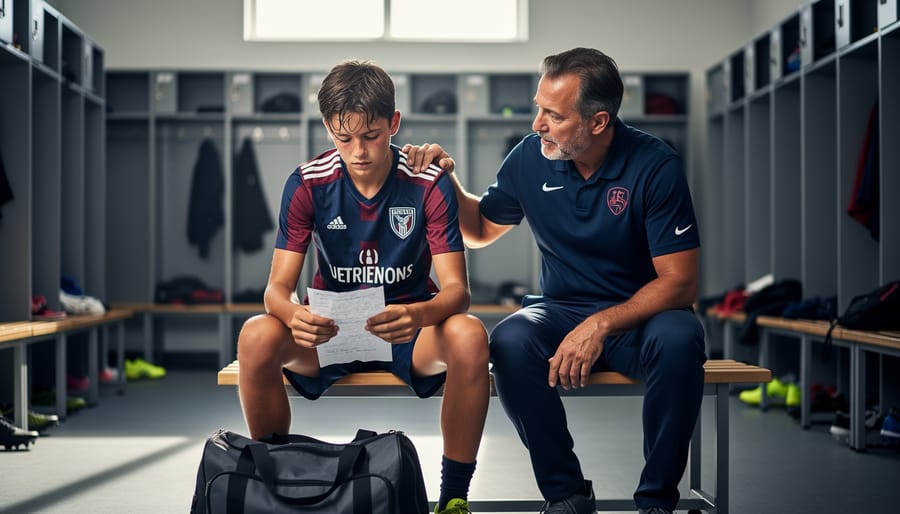
Start by validating emotions. When a player experiences disappointment, acknowledge their feelings without immediately jumping to solutions. Simple statements like “I can see you’re hurting, and that’s completely normal” create psychological safety for processing difficult experiences.
Next, help players identify specific growth opportunities. If a player didn’t make a team, work together to pinpoint two or three concrete skills to develop before next tryouts. This transforms abstract failure into an actionable development plan. Coaches can provide written feedback highlighting both strengths and improvement areas, giving players clear direction forward.
Introduce the concept of “yet” into your vocabulary. When players say “I can’t make that play,” respond with “You can’t make that play yet.” This subtle shift, supported by Stanford psychologist Carol Dweck’s growth mindset research, rewires thinking from fixed limitations to potential development.
Share stories of professional athletes who faced similar setbacks. Many NHL players experienced cuts or demotions in their junior careers but used those moments as fuel for improvement. These narratives normalize struggle as part of the journey rather than evidence of inadequacy, building perspective and perseverance.
Creating Learning-Focused Environments
Creating a learning-focused environment within competitive junior hockey requires intentional program design that balances athletic excellence with personal growth. Coaches can structure practices using the 70-20-10 development model: dedicating 70% of time to skill-building activities that encourage experimentation and problem-solving, 20% to mentorship and feedback conversations, and 10% to competitive drills. This evidence-based approach ensures athletes develop both technical abilities and critical thinking skills.
Effective programs establish clear team values beyond winning, such as resilience, accountability, and respect. Coaches should openly discuss these principles and recognize players who demonstrate them, not just those who score goals. After games, regardless of outcome, dedicate time to reflection discussions where athletes identify what they learned about themselves and their teammates.
Creating psychological safety is essential. Players must feel comfortable taking risks without fear of harsh criticism. When mistakes happen during games, view them as teaching moments rather than failures. This approach builds confidence and encourages the creative play that distinguishes elite athletes.
Additionally, integrate academic check-ins into team routines, showing young players that their education matters equally to their athletic pursuits. Programs that celebrate academic achievements alongside athletic ones send a powerful message about holistic development and prepare athletes for life beyond hockey.
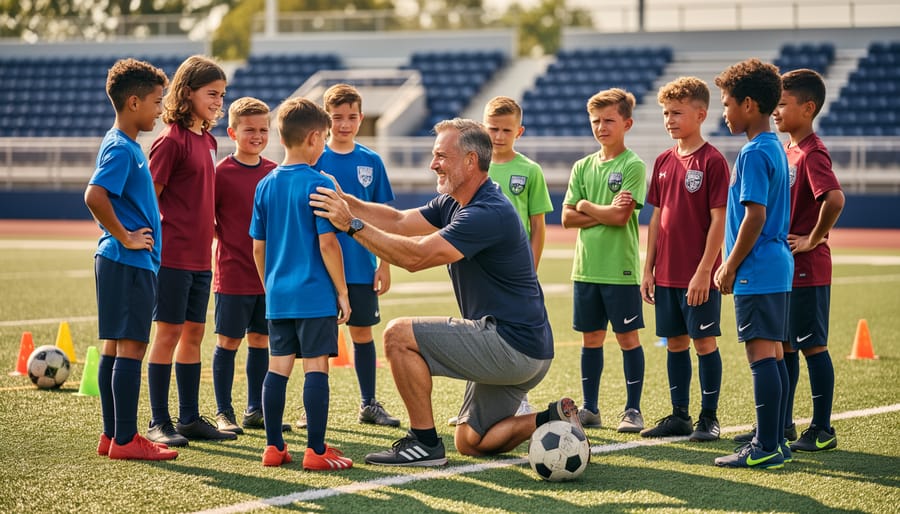
The Coach’s Role in Character-First Hockey
Setting Values-Based Team Standards
Establishing team values that extend beyond the scoreboard creates a foundation for meaningful character development in junior hockey. Research from youth sports psychology consistently shows that when teams define shared principles—such as respect, integrity, accountability, and effort—athletes develop stronger intrinsic motivation and resilience.
Begin by involving players in creating team agreements through guided discussion. Ask questions like “What kind of teammate do you want to be?” and “How do we want to treat each other when things get difficult?” This collaborative approach gives young athletes ownership of their culture. Examples of effective team standards include celebrating effort over outcomes, supporting teammates through mistakes, and showing respect to opponents and officials regardless of game results.
Accountability structures reinforce these values through consistent application. Designate team captains or rotating leadership roles responsible for upholding standards. Implement positive recognition systems where players acknowledge teammates who exemplify core values during practices and games. When violations occur, address them promptly through restorative conversations rather than punitive measures alone.
Visual reminders matter too. Post team agreements in locker rooms and reference them regularly during team meetings. Coaches should model these values consistently, as research shows young athletes learn most powerfully through observation. When values become the team’s identity rather than just words on a wall, players internalize principles that serve them far beyond their hockey careers.
Balancing Competition and Development
Finding the right balance between competitive success and player development requires intentional coaching strategies that prioritize long-term growth over immediate results. Research consistently shows that athletes who receive varied playing experiences and consistent ice time during their developmental years build stronger foundational skills and maintain greater engagement with the sport.
Even during high-stakes games, effective coaches implement rotation systems that ensure every player contributes meaningfully. This might mean establishing minimum shift requirements regardless of score, or creating specialized roles where developing players can succeed while gaining confidence. When players understand their purpose on the ice, they remain invested in team success rather than feeling like spectators.
Position rotation serves as another powerful developmental tool. Allowing forwards to experience defensive responsibilities, or letting defenders join offensive rushes during practice and lower-pressure games, builds hockey intelligence and empathy for teammates’ roles. Young athletes who understand multiple positions make smarter decisions and become more adaptable players.
Throughout this competitive journey, maintaining educational focus remains paramount. Coaches and parents should regularly communicate that academic achievement opens doors beyond hockey, creating backup plans and diverse interests. Celebrating classroom successes with equal enthusiasm as on-ice victories reinforces that young athletes are students first, building resilient individuals prepared for whatever path their future holds, whether that includes elite hockey or entirely different pursuits.
Supporting Your Player’s Journey: A Guide for Parents and Educators
What to Ask When Evaluating Programs
When evaluating junior hockey programs, asking the right questions helps ensure your young athlete develops both on and off the ice. Start by inquiring about the coaching philosophy: “How do you balance skill development with character education?” and “What specific values does your program emphasize?” These questions reveal whether character building is genuinely integrated or simply mentioned in promotional materials.
Ask about academic support structures: “What resources are available to help players maintain their educational progress?” and “How do you handle scheduling conflicts between games and school commitments?” Research shows that programs prioritizing education produce more well-rounded individuals prepared for life beyond hockey.
Explore how the organization handles adversity and setbacks: “How do coaches respond when players make mistakes?” and “What processes exist for addressing conflicts between teammates?” These answers illuminate whether the program fosters resilience and emotional intelligence.
Finally, request specific examples: “Can you share a recent situation where character development took priority over winning?” and “How do you measure success beyond game outcomes?” Programs genuinely committed to holistic development will readily provide concrete evidence of their values in action, helping you make an informed decision that serves your athlete’s long-term growth.
Keeping Education at the Center
Regardless of where your young athlete stands on the junior hockey pyramid, education must remain the foundation of their journey. Research consistently shows that student-athletes who maintain strong academic performance develop better time management skills, resilience, and long-term career prospects—qualities that serve them far beyond the rink.
Start by establishing non-negotiable study times that work around practice schedules. Treat academics with the same commitment given to hockey training. Encourage athletes to communicate with teachers about their schedules, fostering responsibility and advocacy skills. Many successful professional players credit their academic discipline for teaching them the focus and determination that elevated their game.
For parents and coaches, model the message that hockey is an opportunity, not a guarantee. Statistics remind us that only a small percentage of junior players reach professional levels, making education the most reliable investment in a young person’s future. Create environments where academic achievements are celebrated alongside athletic ones.
Consider flexible educational options when necessary, but ensure they maintain rigorous standards. Online courses and tutoring can supplement traditional schooling without compromising quality. The goal is helping young athletes thrive in both arenas, developing the character and competence that define truly successful individuals, regardless of where hockey takes them.
The junior hockey pyramid doesn’t have to break character—it can build it. When approached with intention and balance, this competitive structure becomes a powerful platform for developing resilient, principled young people who happen to play hockey exceptionally well. The key lies in how we, as coaches, parents, and educators, choose to guide athletes through the journey.
Remember that athletic excellence and character development aren’t opposing forces; they’re complementary pathways that reinforce each other. The most successful programs recognize this truth, creating environments where young players learn accountability, teamwork, and perseverance alongside their technical skills. Research consistently shows that athletes who develop strong character traits perform better under pressure and sustain longer, healthier careers.
Start today by asking yourself: What values are we reinforcing through our words and actions? Are we celebrating effort as much as outcomes? Are we prioritizing education alongside athletics? These questions matter because our answers shape the next generation.
Challenge yourself to create spaces where young athletes can grow into strong people, not just strong players. Their futures depend on it.