
Dale Earnhardt Jr. never won a NASCAR Cup Series championship, yet his legacy transcends titles. For coaches, educators, and parents guiding young athletes, this reality offers a profound lesson: championship success isn’t always measured by trophies alone.
When we examine Dale Jr.’s career through the lens of youth development, we discover a masterclass in resilience, personal growth, and authentic leadership that matters far more than any single victory. His 26 Cup Series wins and two Xfinity Series championships demonstrate excellence, but his greatest contribution to sports education lies in how he navigated pressure, built team culture, and maintained integrity throughout his journey.
The search for “Dale Jr. championships” often reflects a deeper question: what defines success in competitive sports? For those developing young hockey players or athletes in any discipline, this distinction matters enormously. Junior championships at the elite level, whether in hockey’s World Juniors or NASCAR’s developmental series, serve as crucibles where character forms alongside skill.
Dale Earnhardt Jr.’s path reveals how athletes can achieve legendary status through consistency, connection with teammates, and commitment to improvement rather than singular championship moments. His approach to racing, built on learning from setbacks and supporting those around him, mirrors the coaching philosophies that create lasting impact in junior sports programs.
This article explores how championship-level thinking applies to youth hockey development, drawing lessons from athletes who understood that the process of becoming a champion shapes young people more powerfully than the championship itself. Whether you’re coaching a junior team or supporting a young athlete’s dreams, understanding this distinction transforms how you measure progress and define success.
The principles that guide elite junior championships can inform every practice, every teaching moment, and every conversation about what it means to compete with purpose.
Understanding Dale Jr Championships in Junior Hockey
The Pathway from Junior Championships to Professional Success
Junior championships serve as critical proving grounds where young players demonstrate their abilities under intense scrutiny. College recruiters, professional scouts, and team development personnel attend these tournaments specifically to evaluate talent in high-stakes environments where performance matters most. A strong showing at championship events can open doors that regular season play simply can’t, scholarships, draft consideration, and invitations to development camps all flow from what happens on championship ice.
These tournaments compress months of evaluation into days of concentrated observation. Scouts watch how sixteen-year-olds handle third-period pressure when games matter, how they respond to setbacks, and whether their skills hold up against elite competition from across regions or countries. The data points collected during junior championships, speed, decision-making under pressure, coachability between periods, carry more weight than regular season statistics because the competition level reveals who can truly perform when it counts.
For players pursuing hockey beyond junior levels, championship experience provides tangible proof of readiness. Professional organizations value athletes who’ve competed at junior championship levels because they’ve already faced the mental and physical demands of playoff hockey. They’ve learned to prepare for elimination games, manage performance anxiety, and execute team systems against opponents who’ve scouted them thoroughly. This experience translates directly to professional environments where every game carries playoff-level intensity and scrutiny.
Why Championship Experience Matters for Young Athletes
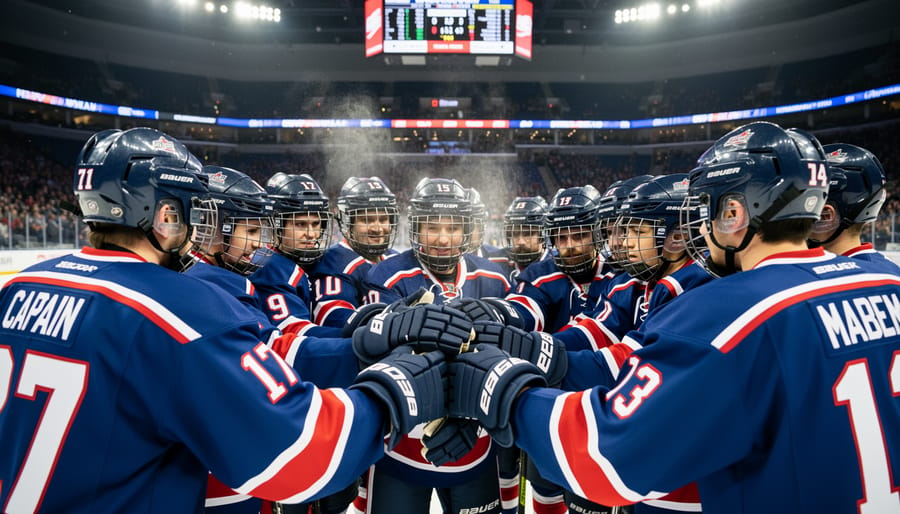
Championship competition at events like the Dale Jr Championships serves as powerful crucible where young athletes develop skills that extend far beyond the ice. When players face high-stakes games with scouts watching and medals on the line, they learn to manage pressure, bounce back from setbacks, and perform when it matters most, lessons that translate directly to academic challenges and future careers.
Research confirms that youth sports build character through adversity and teamwork experiences impossible to replicate in practice settings. At championship events, athletes experience genuine consequences for their decisions, forcing rapid growth in areas like emotional regulation, strategic thinking, and collaborative problem-solving. A player who stays composed after a crucial penalty or supports a struggling teammate during elimination rounds develops resilience that will serve them in university exams and professional careers.
These tournaments also teach young people how to set meaningful goals, prepare systematically, and handle both success and disappointment with grace. Parents and educators should view championship participation not primarily as trophy collection but as intensive leadership and character development workshops where students learn who they are under pressure.
Dale Hunter’s Coaching Legacy in Junior World Championship
From NHL Player to Junior Hockey Mentor
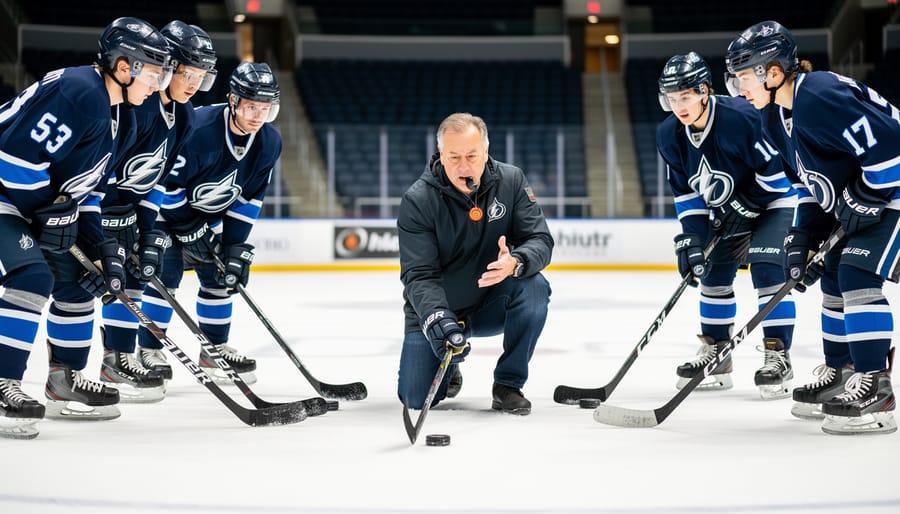
Dale Hunter’s path from NHL veteran to championship-level junior coach wasn’t a typical retirement trajectory. After 19 seasons in professional hockey, 1,407 games, three All-Star appearances, and a reputation as one of the game’s most competitive players, Hunter made a deliberate choice to invest his experience into developing the next generation. Rather than pursuing NHL coaching positions immediately available to former captains with his credentials, he returned to the Ontario Hockey League in 2001 to co-own and coach the London Knights, viewing junior hockey as where he could make the most meaningful impact.
What Hunter brought to junior championships wasn’t just X’s and O’s expertise. His playing career taught him the mental demands of high-stakes competition, the discipline required to sustain excellence, and the character traits that separate good players from great ones. He’d experienced firsthand how pressure reveals an athlete’s true foundation, technical skills matter, but resilience, preparation, and teamwork determine championship outcomes.
This perspective reshaped his coaching philosophy. Hunter recognized that junior world championships represent more than talent showcases; they’re educational laboratories where young athletes test themselves against elite competition while building life skills that transcend hockey. His 1,020 career penalty minutes weren’t lost on him either, he understood the consequences of undisciplined play and channeled that knowledge into teaching emotional control and strategic thinking.
By bringing professional-level accountability to junior development without sacrificing athlete well-being, Hunter created a bridge between competitive excellence and holistic growth that would define his championship legacy.
Hunter’s Player-First Approach to Championship Competition
Hunter’s approach to junior championship hockey differs fundamentally from coaches who chase trophies at any cost. He views these competitions not as endpoints, but as developmental opportunities where young athletes learn lessons that extend far beyond the ice.
During championship runs, Hunter maintains strict academic check-ins with his players. He’s been known to pull athletes from optional practices if their schoolwork suffers, sending a clear message that education isn’t negotiable. This stance might seem counterintuitive during championship preparation, but it reflects his understanding that most junior players won’t reach professional hockey, and even those who do will eventually need skills beyond skating and shooting.
His training schedules reflect this philosophy. Unlike coaches who increase ice time exponentially before championships, Hunter structures practices around quality over quantity. He incorporates rest days, monitors physical and mental fatigue, and adjusts workloads based on individual player needs. When a promising forward showed signs of burnout before a crucial championship game, Hunter benched him entirely, prioritizing the athlete’s long-term health over a single victory.
Hunter’s player development conversations focus on five-year trajectories rather than next week’s games. He asks players where they want to be after graduation, what they’re learning about themselves under pressure, and how championship experiences are building character traits they’ll need in whatever career they pursue. This perspective helps young athletes contextualize both victories and defeats as learning moments rather than defining events.
His communication style emphasizes effort, growth, and sportsmanship over outcomes. Post-game debriefs examine decision-making processes and teamwork rather than solely analyzing the scoreboard, helping players extract developmental value from every championship experience regardless of results.

Key Principles from Hunter’s Championship Coaching Methods
Evidence-Based Training Over Tradition
Dale Hunter’s championship teams don’t rely on “we’ve always done it this way.” Instead, he blends cutting-edge sports science with fundamental hockey skills, creating a training environment where data informs decisions without overriding coaching intuition. His players undergo regular performance assessments, tracking skating speed, shot velocity, recovery times, and even sleep quality, to identify individual strengths and areas needing work. This information shapes personalized development plans rather than one-size-fits-all drills.
At junior championship camps, Hunter integrates video analysis sessions where athletes review their positioning, decision-making, and technique frame by frame. These aren’t shaming exercises; they’re collaborative learning opportunities where players discover patterns in their game they never noticed before. Coaches use heart rate monitors during high-intensity practices to ensure training loads match each athlete’s capacity, preventing burnout while maximizing adaptation.
The approach respects hockey’s core principles, crisp passing, defensive responsibility, physical conditioning, while questioning outdated methods that persist simply because previous generations used them. When research suggests better warm-up protocols or recovery strategies, Hunter adapts. When traditional drills still produce results, he keeps them. This pragmatic blend teaches young athletes to think critically about their training, asking “why” rather than blindly following routine. The result is championship teams built on both timeless fundamentals and modern performance optimization, preparing players for hockey’s evolving demands at higher levels.
Building Mental Resilience for High-Pressure Moments
Hunter recognizes that talent alone doesn’t determine success at the dale jr championships, mental fortitude separates good players from great ones. His approach to psychological preparation begins months before the tournament, teaching athletes to reframe pressure as opportunity rather than threat. Instead of avoiding difficult moments in practice, Hunter deliberately creates high-stakes scenarios where players must perform under scrutiny, building their capacity to handle championship intensity.
A cornerstone of his method involves teaching emotional regulation through immediate feedback loops. When a player makes a critical error during practice, Hunter pauses to help them process the mistake constructively rather than emotionally. He asks questions: “What did you learn?” and “How will you adjust?” This shifts young athletes from reactive thinking to analytical problem-solving, a skill that proves invaluable during tournament play when split-second decisions matter.
Hunter also emphasizes visualization techniques backed by sports psychology research. Players spend dedicated time mentally rehearsing specific game situations, penalty shots, third-period deficits, overtime scenarios. This mental practice creates neural pathways that help athletes respond effectively when those moments arrive in actual championship competition.
Perhaps most importantly, Hunter normalizes setbacks as part of the championship journey. He shares stories from his NHL career where failure preceded breakthrough moments, demonstrating that resilience isn’t avoiding adversity but learning to navigate through it. For young players at the dale jr championships, this perspective transforms pressure from something to fear into a proving ground for character development.
Fostering Sportsmanship at the Championship Level
Hunter’s championship coaching demonstrates that competitive excellence and ethical behavior are inseparable, not opposing values. At junior world championships, where pressure intensifies and stakes feel enormous, he consistently reinforces that how athletes compete matters as much as results. This approach teaches young players that cutting corners, disrespecting opponents, or compromising integrity ultimately undermines genuine success. Hunter creates team cultures where players hold each other accountable to high standards both on and off the ice.
This emphasis translates directly to educational hockey programs. When coaches model and expect sportsmanship during critical moments, acknowledging opponent skill, accepting referee decisions gracefully, supporting struggling teammates, they prepare athletes for challenges beyond hockey. Young players learn that character revealed under pressure defines them more than any championship trophy. These lessons prove essential for students navigating academic pressures, future careers, and life’s inevitable setbacks with integrity intact.
Lessons for Educational Hockey Programs from Championship Success

Adapting Elite Methods for Youth Development Programs
Championship-level techniques from coaches like Dale Hunter can transform youth programs when adapted thoughtfully. The key isn’t replicating elite intensity but translating core principles into developmentally appropriate practices that serve young learners first.
Start with skill progression frameworks used at junior world championships, but break them into smaller, achievable milestones. Where Hunter might drill complex breakout patterns under game pressure, youth coaches can introduce the same concepts through simplified drills that build confidence before adding competition. Focus on mastering fundamentals, skating mechanics, puck handling, positional awareness, using repetition and positive reinforcement rather than time constraints.
Mental preparation strategies scale beautifully to younger ages. Hunter’s pre-game visualization and focus routines work for 12-year-olds as effectively as championship competitors when framed around personal improvement rather than scoreboard outcomes. Teach players to set individual performance goals, completing three successful passes, maintaining defensive positioning, that build the same resilience without the added pressure of team standings.
Integrate film review sessions, a staple of championship preparation, as teaching moments rather than critiques. Show clips highlighting good decisions, effective teamwork, and growth areas without singling out mistakes. This mirrors how Hunter develops hockey IQ at higher levels while protecting developing athletes’ confidence.
Most importantly, preserve practice-to-game ratios that prioritize skill development. Championship programs might practice four days for one game; youth programs should maintain similar ratios, recognizing that learning happens through deliberate practice, not tournament schedules. When you borrow from elite methods while keeping education and enjoyment central, you create programs where young athletes develop both hockey skills and life skills simultaneously.
Balancing Academics and Athletic Excellence
Dale Hunter’s championship approach directly challenges the false choice between academic success and athletic achievement. His programs require players to maintain strong academic standing before they step onto championship ice, treating classroom performance as foundational rather than optional. This isn’t arbitrary, Hunter recognizes that the same discipline, time management, and goal-setting skills that produce strong students create resilient competitors under championship pressure.
Players in Hunter’s system learn to view academics and athletics as mutually reinforcing. The focus required for complex chemistry assignments translates to analyzing game film. The persistence needed to master calculus mirrors the dedication required to perfect skating technique. Far from distracting from championship preparation, academic engagement actually sharpens the cognitive skills that separate good players from great ones in high-stakes junior competitions.
Hunter structures training schedules around educational commitments, not despite them. Practice times accommodate study halls, and travel to championship events includes dedicated academic support. This practical integration sends a clear message: your education isn’t what you do when hockey ends, it’s what makes you a complete athlete right now.
The results speak clearly. Players from Hunter’s programs consistently secure college scholarships and professional opportunities while maintaining academic eligibility and genuine learning. They arrive at the next level prepared not just as skilled hockey players, but as disciplined thinkers who understand that excellence in one arena builds capacity for excellence everywhere. For educators and coaches building programs around similar principles, Hunter’s championship record proves that refusing to compromise on academics doesn’t limit competitive success, it enables it.
Inspiring the Next Generation Through Championship Examples
Young athletes watching Hunter’s teams compete at the junior world championships witness something more valuable than highlight-reel goals, they see a blueprint for sustainable success. His championship rosters demonstrate that discipline and dedication extend beyond the rink. Players maintain their academic commitments during tournament preparation, manage media responsibilities with maturity, and show respect toward officials even in tight games. These examples resonate far more powerfully than any motivational speech because they show young hockey players what’s actually possible when development takes priority over shortcuts.
The pathways Hunter’s former junior championship players have taken tell compelling stories. Some advanced to professional careers, but many others leveraged their hockey experience into college scholarships, careers in sports management, coaching positions, or fields entirely outside hockey. This diversity of outcomes illustrates the true power of holistic development. When young players see championship-level athletes who later became teachers, business owners, or community leaders, they understand that junior hockey success opens doors rather than narrowing options.
Parents and coaches can harness these championship examples in practical ways. Share profiles of Hunter’s former players who balanced tournament preparation with exam schedules. Highlight championship moments where sportsmanship mattered as much as the scoreline. Discuss how the mental resilience developed through championship pressure translates to other life challenges. These real-world examples provide concrete evidence that education-focused hockey programs can compete at the highest levels while preparing athletes for life beyond the sport, making the championship stage not just a competition venue but a powerful teaching tool for the next generation.
Dale Jr Championships represent more than just trophies and victories. They showcase what’s possible when competitive excellence meets genuine concern for young athletes’ futures. Dale Hunter’s work in Junior World Championship contexts proves that championship-level hockey can nurture students first and players second, building character alongside skill.
His model challenges every coach, educator, and parent to ask: Are we developing complete human beings or just assemblers of stats? The answer shapes young lives far beyond the ice. When we prioritize evidence-based training, mental resilience, and academic achievement alongside athletic goals, we create champions in every sense.
You don’t need a world stage to apply these principles. Start tomorrow in your gym, classroom, or local rink. Lead with integrity, balance competition with compassion, and remember that your influence extends decades beyond the final buzzer. That’s the true championship legacy worth pursuing.