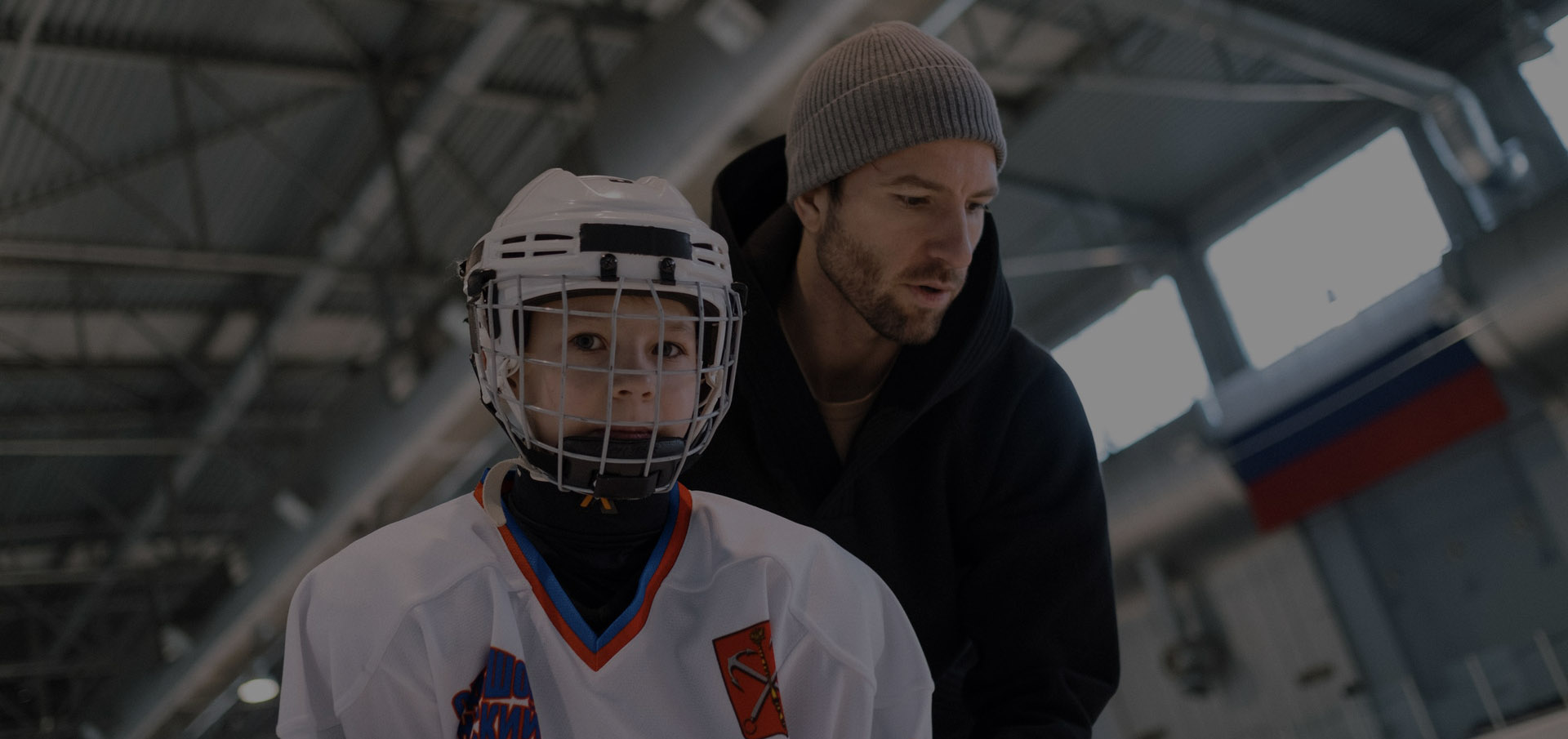
Choosing the right hockey helmet for youth players means prioritizing CSA certification above all else, then matching fit, protection level, and comfort to your child’s age, skill development, and league requirements. In Canada, only helmets bearing the round blue and red CSA certification label meet the CAN/CSA-Z262.1 safety standards mandated by Hockey Canada, and that sticker on the back or inside of the helmet is your non-negotiable starting point. Parents and coaches searching for youth hockey helmets in 2026 face a landscape where certification verification matters more than brand recognition or aesthetic appeal, especially as young athletes progress through house league to competitive play.
The decision to let kids play hockey comes with a responsibility to protect developing brains and bodies through properly certified equipment. Understanding the difference between CSA certification (required in Canada) and HECC certification (used under USA Hockey jurisdiction) prevents costly mistakes and ensures your young player meets league safety requirements. This guide walks you through the factors that matter most when selecting a youth hockey helmet, compares helmet types suited to different stages of development, highlights common purchasing errors that compromise safety, and provides evidence-based recommendations that support holistic athlete development. Whether you’re outfitting a first-year novice or replacing equipment for a bantam-level player, the choices you make today protect not just physical safety but long-term participation in the sport.
Understanding Youth Hockey Helmet Safety Standards
CSA Certification: The Canadian Standard
When parents shop for youth hockey equipment in Canada, the CSA certification label isn’t just a nice-to-have feature, it’s the foundation of your child’s head protection. Only CSA-certified helmets meet Hockey Canada’s requirements for sanctioned activities, which means if the helmet lacks proper certification, your young player won’t be allowed on the ice for league games or organized practices.
The certification itself demonstrates that a helmet model has undergone rigorous testing and meets the CAN/CSA-Z262.1 standard. These tests measure impact resistance, penetration resistance, and retention system strength under conditions that simulate real game scenarios. When a helmet passes, it earns the distinctive round label featuring blue and red CSA colours, typically located on the back exterior or inside the helmet.
Certified at time of manufacture these helmets carry no mandated expiration date from CSA Group. That doesn’t mean helmets last forever, but it clarifies that the certification itself remains valid as long as the helmet maintains its structural integrity. Parents should focus on the helmet’s physical condition rather than worrying about an arbitrary date stamp, inspecting for cracks, compromised padding, or damage after impacts that might compromise protection regardless of when the helmet was made.
HECC Certification and Jurisdictional Differences
While CSA certification is mandatory in Canada, parents often encounter helmets marked with HECC (Hockey Equipment Certification Council) certification, particularly when shopping online or near the U.S. border. HECC-certified helmets are mandated for players under USA Hockey jurisdiction, but this certification does not apply in Canada. The HECC certification sticker uses different testing standards and does not meet Hockey Canada’s requirements for sanctioned play.
This jurisdictional split matters because a helmet certified only by HECC cannot be used in Hockey Canada programs, regardless of its quality or price. Parents must verify the round blue and red CSA certification label, which confirms the helmet meets CAN/CSA-Z262.1 standards required for Canadian ice hockey.
Some manufacturers produce helmets with dual certification, displaying both HECC and CSA labels. These work in both countries, offering flexibility for families who travel across the border for tournaments or training. However, for players participating exclusively in Canadian programs, CSA certification alone is sufficient and non-negotiable. Always check the certification label before purchase, not just the product description or packaging claims.
Key Factors When Choosing a Youth Hockey Helmet
Getting the Right Fit for Growing Athletes
A properly fitted helmet protects a young player’s head only when it stays in position during impacts and movement on the ice. For growing athletes, this creates a unique challenge: the helmet must fit correctly today while accounting for normal growth patterns without compromising immediate safety.
Start by measuring head circumference at its widest point, typically about one inch above the eyebrows. Use a soft measuring tape and record the measurement in both inches and centimeters, as manufacturers use different units on their sizing charts. Most youth helmets range from extra-small (covering roughly 18.5-19.5 inches) through large (approximately 21.5-22.5 inches), though these ranges vary by brand.
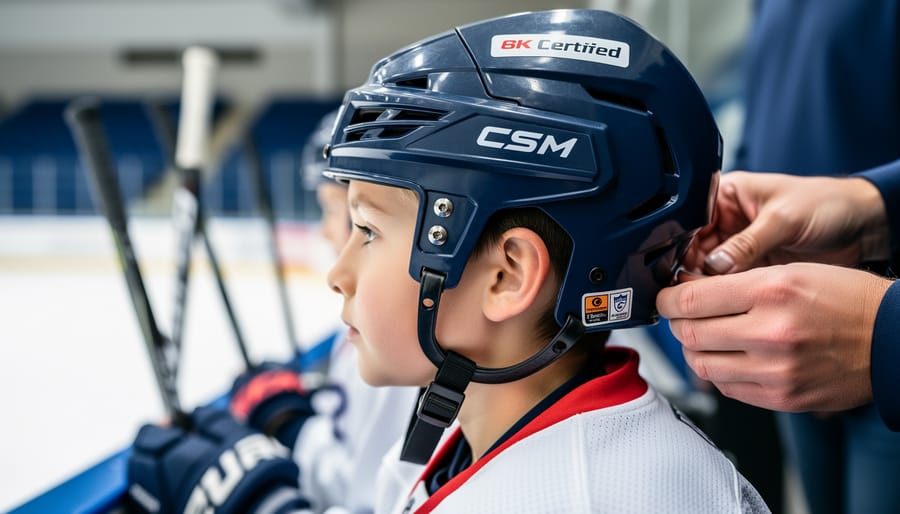
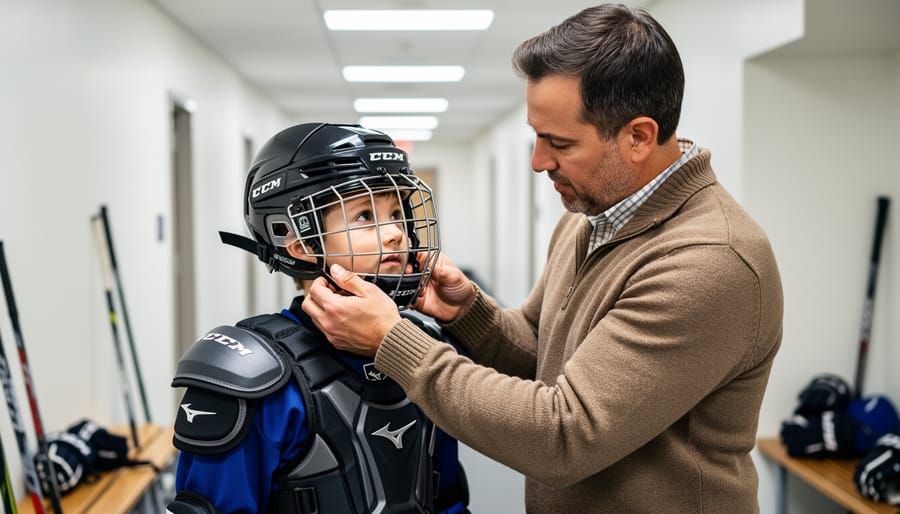
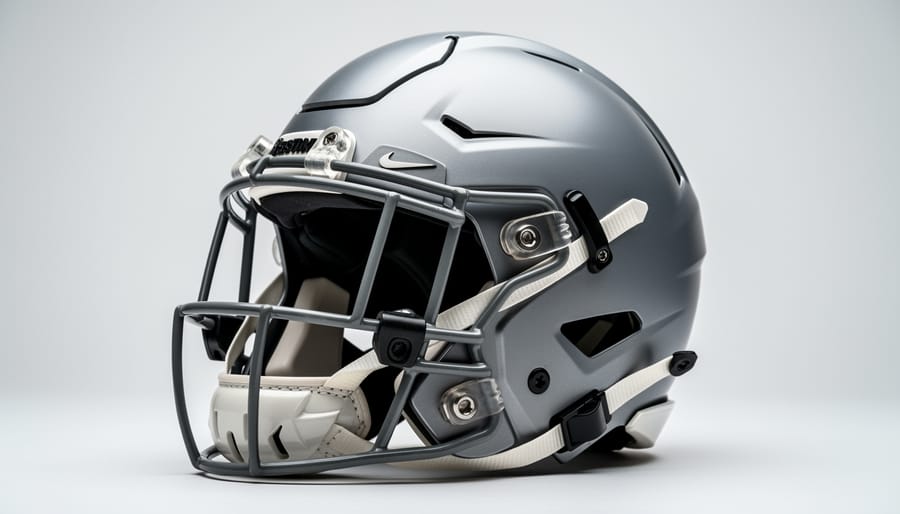
When the helmet sits properly on the head, it should rest level, not tilted back, with the front edge sitting one to two finger-widths above the eyebrows. The chin strap should form a “V” shape under the ears, and when fastened, allow only one finger between the strap and chin. The helmet shouldn’t rock forward or backward when the player moves their head vigorously.
Parents often buy helmets a size too large, hoping to extend their investment as children grow. This undermines the helmet’s protective design. CSA-certified helmets are tested to perform when fitted according to manufacturer specifications, and excessive space between the padding and skull allows dangerous movement during impacts. Quality adjustable helmets include tool-free adjustment systems that accommodate six to twelve months of growth while maintaining proper contact with the head.
Before purchasing, have your young player try the helmet with any equipment they’ll wear underneath. Support from experienced junior coaching staff can help verify proper fit, particularly for first-time hockey families unfamiliar with equipment standards. A correctly fitted helmet feels snug without pressure points, stays in position during head movement, and doesn’t obstruct vision or hearing.
Comfort Features That Support Long-Term Development
A comfortable helmet becomes a helmet your young player actually wants to wear, which directly impacts their safety and long-term engagement with the sport. Just as parents carefully choose a youth stick for proper development, selecting a helmet with the right comfort features supports consistent use throughout practices and games.
Quality padding makes the difference between a helmet that feels secure and one that creates pressure points during extended wear. Look for multi-density foam systems that distribute impact forces while remaining soft against a young player’s head. The padding should feel plush without excessive bulk, and removable liner systems allow for regular cleaning, keeping the helmet fresh through a full season.
Ventilation channels matter more than many parents realize. Young athletes generate significant heat during play, and proper airflow prevents the sweaty discomfort that makes children resistant to keeping their helmets on. Strategic vent placement moves air through the helmet without compromising the protective shell.
Weight considerations become crucial for developing neck muscles. A helmet that feels heavy after ten minutes will feel unbearable after a full practice. Modern youth helmets balance protection with lighter materials, recognizing that a six-year-old’s neck strength differs substantially from a teenager’s. An appropriately weighted helmet reduces fatigue and supports proper skating posture as young players build strength and endurance over multiple seasons.
Types of Youth Hockey Helmets Compared
Entry-Level Helmets for Beginning Players
Entry-level helmets provide essential protection for young players beginning their hockey journey, and the most important thing to understand is this: basic does not mean less safe. Every helmet sold for use in Hockey Canada sanctioned activities must meet the same CAN/CSA-Z262.1 safety standards, regardless of price point. When you see the round blue and red CSA certification label on the back or inside of an entry-level helmet, you know it has passed the same rigorous testing as premium models.
The difference between entry-level and advanced helmets typically involves comfort features, adjustment mechanisms, and materials, not fundamental safety compliance. Beginning players benefit from simpler designs with straightforward sizing and fewer adjustment points to confuse young athletes or parents. These helmets use durable foam padding and straightforward chin strap systems that are easy for children to manage independently as they develop responsibility for their own equipment.
Many reputable manufacturers offer certified entry-level options specifically designed for youth players. The key is verifying CSA certification before any other consideration. A properly certified basic helmet that fits correctly protects a beginner far better than an expensive model that does not meet Canadian standards or fits poorly. For young players just learning to skate and handle the puck, focus on compliance first, then evaluate fit and comfort within your certified options.
Advanced Youth Helmets for Developing Athletes
As young players develop their skills and increase their ice time, advanced youth helmets offer features that support both enhanced protection and athletic performance. These helmets incorporate sophisticated technologies designed for athletes who train regularly, compete at higher levels, and demand more from their equipment.
Advanced models typically feature multi-density foam systems that provide superior impact absorption across different collision types. Rather than a single foam layer, these helmets use strategic combinations of softer and firmer materials to manage both low-speed contact and harder impacts. The internal suspension systems in premium youth helmets also offer more precise adjustment mechanisms, allowing for micro-adjustments that accommodate growth while maintaining optimal fit throughout the season.
Ventilation becomes increasingly important as players spend more time on ice during practices, games, and skill development sessions. Advanced helmets incorporate engineered airflow channels that reduce heat buildup without compromising structural integrity. This improved breathability helps young athletes maintain focus and comfort during extended play periods.
Weight optimization represents another key advancement. While maintaining full CSA certification standards, premium youth helmets often utilize advanced materials that reduce overall weight, lessening strain on developing neck muscles during prolonged wear. This attention to weight distribution supports proper posture and reduces fatigue, particularly important for players transitioning to more demanding practice schedules.
The adjustment systems in these helmets frequently include tool-free mechanisms that parents and coaches can modify quickly between periods, ensuring consistent protection as players grow and as padding settles with regular use.
Top Recommendations for Youth Hockey Helmets
What to Look for in Reputable Manufacturers
Reputable manufacturers prioritize certification compliance above all else. When evaluating any brand, first verify that their helmets carry the round blue and red CSA certification label, confirming they meet CAN/CSA-Z262.1 standards required for Hockey Canada sanctioned activities. This certification happens at manufacture and has no mandated expiration date, so focus on the label’s presence rather than purchase date.
Established brands like CCM offer certified options across different youth categories, from beginner through advanced levels. Quality manufacturers provide clear sizing charts, adjustable fit systems that accommodate growing heads, and transparent information about which age groups and skill levels each model serves. Look for companies that openly display certification details on packaging and product descriptions.
Beyond certification, evaluate construction quality: inspect padding thickness and coverage, check that adjustment mechanisms move smoothly and lock securely, and examine shell materials for consistent molding without thin spots. Reputable manufacturers stand behind their products with responsive customer service and replacement part availability. They understand that youth helmets must balance protection with comfort to support young athletes’ development, not just meet minimum standards.
Matching Helmet Choice to Player Development Stage
Matching helmet choice to your young player’s current stage ensures both safety and comfort while supporting their natural progression in the sport. A five-year-old just learning to skate has different needs than a twelve-year-old playing competitive house league, even though both require CSA-certified protection.
For beginners aged 5-7, prioritize lightweight helmets with generous padding and simple adjustment systems. At this stage, comfort determines whether young players will keep their helmets on during practice. Entry-level certified options work well because these athletes are developing basic skating skills with minimal contact, and excessive features can add unnecessary weight that strains developing neck muscles.
As players advance into the 8-10 age range and join organized leagues with more physical play, look for helmets with enhanced adjustment capabilities and better ventilation. Growing athletes need tool-free sizing systems that accommodate rapid head growth between seasons. Improved airflow becomes important as practice intensity increases and players spend longer periods on ice.
Competitive youth players aged 11 and up benefit from helmets designed for advanced protection, particularly if they play physical positions like defense or center where contact increases. These athletes can handle slightly heavier helmets that offer superior impact absorption and more sophisticated fit systems. However, certification remains the foundation, advanced features never substitute for the CSA standard that every helmet must meet regardless of price point or brand reputation.
Common Mistakes to Avoid When Buying Youth Hockey Helmets
The Certification Compliance Trap
One of the most dangerous assumptions parents make is that every helmet sold in a sporting goods store automatically meets the safety requirements for their young player’s league. Location of purchase doesn’t determine certification compliance. A helmet bought in Canada might carry HECC certification designed for USA Hockey, while a helmet purchased online from an American retailer won’t necessarily display the round blue and red CSA certification label required for Hockey Canada sanctioned activities.
The compliance trap deepens when parents confuse where they bought the helmet with where their child will play. Just because a reputable Canadian retailer stocks a helmet doesn’t guarantee it meets CAN/CSA-Z262.1 standards. Similarly, selecting what to wear for game day involves checking equipment requirements specific to your jurisdiction, not assuming retail availability equals approval.
Before purchasing any youth hockey helmet, verify the certification label yourself. Look for the distinctive CSA mark on the back or inside of the helmet. HECC stickers, while valid under USA Hockey jurisdiction, don’t apply in Canada. Cross-border shopping, hand-me-downs from American cousins, and online marketplaces all increase certification confusion risk, potentially leaving your young athlete with protection that doesn’t meet local safety standards.
Fit and Sizing Errors That Compromise Safety
Even a perfectly certified helmet fails to protect if it doesn’t fit properly. Two sizing mistakes dominate youth hockey equipment purchases, both with serious safety consequences.
Buying a helmet several sizes too large “for growth” is perhaps the most dangerous error. Parents understandably want equipment to last more than one season, but an oversized helmet shifts during play, leaving vulnerable areas exposed during impacts. The protective foam must sit against the head to absorb and distribute force effectively. When a helmet can rotate freely or slide backward during skating, that carefully engineered protection becomes nearly useless. A properly fitted helmet should feel snug without pressure points, with minimal movement when you gently try to twist it while the chin strap is fastened.
The opposite mistake, selecting a helmet that’s uncomfortably tight, creates different problems. Young players quickly learn to loosen chin straps or remove helmets during breaks when they’re experiencing headaches or pressure pain. This habit carries over to gameplay, where an improperly secured helmet provides inadequate protection. Discomfort also discourages consistent wear during practice, exactly when developing athletes need protection most.
The solution requires trying helmets in person when possible, measuring head circumference accurately, and consulting manufacturer sizing charts designed specifically for youth models. Plan to replace helmets as children grow rather than compromising safety for economy. A well-fitting helmet protects; an ill-fitting one simply creates false confidence.
Caring for and Maintaining Youth Hockey Helmets
Regular Inspection and When to Replace
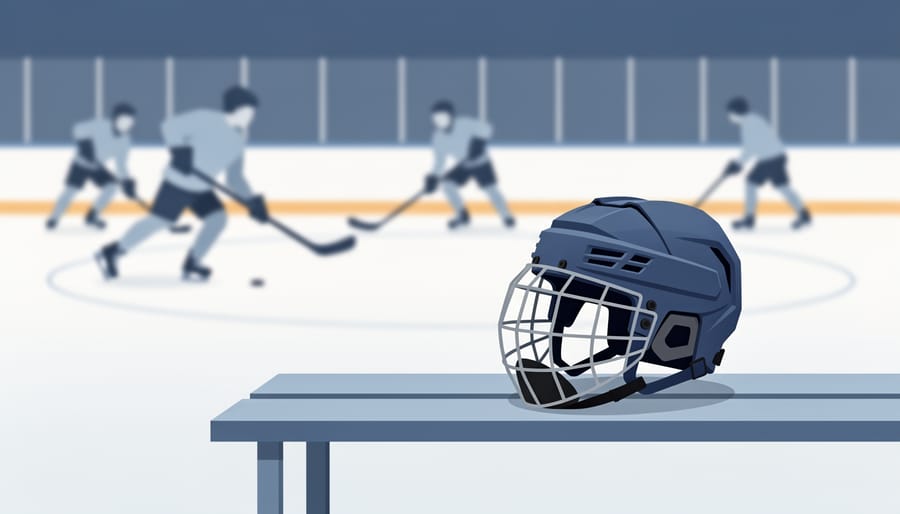
Inspect your young player’s helmet before each season and periodically throughout the year. Look for visible cracks in the shell, particularly around mounting points where the cage attaches. Run your hands along the exterior to feel for weak spots or splits that may not be immediately obvious. Check all straps and buckles for fraying, tears, or hardware that no longer secures properly, a loose chin strap compromises the helmet’s ability to stay in position during impact.
Examine the interior padding closely. Foam that has compressed permanently, torn away from attachment points, or shows signs of deterioration cannot provide adequate protection. If padding feels hard rather than cushioned, or if you can see the shell through worn spots, replacement is necessary.
While CSA certification has no mandated expiration date, any helmet that has sustained a significant impact, whether in a game collision or from being dropped on a hard surface, should be retired immediately. The protective structure may be compromised even without visible damage. Similarly, if the helmet no longer fits properly due to your child’s growth and adjustment systems are maxed out, it’s time for a new one. Physical condition and proper fit determine whether a certified helmet remains safe for use.
Frequently Asked Questions About Youth Hockey Helmets
How do I know if a helmet is CSA certified?
Look for the round blue and red CSA certification label, which usually appears on the back or inside of the helmet. This label confirms the helmet model has passed strict tests and meets the CAN/CSA-Z262.1 safety standards required for Hockey Canada sanctioned activities.
Do hockey helmets expire?
CSA Group certifications for hockey helmets do not include a mandated expiration date. However, helmets should be replaced when they show signs of damage such as cracks, compromised padding, or have sustained significant impacts, regardless of age.
Can I use a HECC-certified helmet in Canada?
No, HECC certification is mandated for players under USA Hockey jurisdiction and does not apply in Canada. Only CSA-certified helmets are approved for use in Hockey Canada sanctioned activities, so always verify the CSA certification label before purchasing.
How tight should a youth hockey helmet fit?
The helmet should fit snugly without causing pressure points or discomfort. When properly fitted, it shouldn’t move when your child shakes their head side to side, and there should be no gap between the forehead and the helmet’s front edge.
When evaluating helmets for young players, parents often wonder about purchasing used equipment to save costs. While used helmets may seem economical, they carry risks that compromise safety. You can’t verify the helmet’s impact history, and previous damage may not be visible. Padding degrades over time, and adjustment mechanisms may be worn. If budget constraints exist, look for reputable manufacturers like CCM that offer certified options across different youth categories, ensuring you get proper protection at various price points while maintaining safety standards.
Parents coaching multiple children sometimes ask about sharing helmets between siblings of similar ages. Each player needs their own properly fitted helmet because fit directly affects protection. Head sizes vary even among children close in age, and sharing prevents proper adjustment for each individual. The helmet’s padding also conforms to the primary wearer’s head shape over time, reducing effectiveness for others.
Choosing a youth hockey helmet isn’t about finding the cheapest option or the most popular brand. It’s about protecting your young athlete with equipment that meets proven safety standards while supporting their growth in the sport.
CSA certification is non-negotiable. If the helmet doesn’t display that round blue and red CSA certification label, it doesn’t belong on a young player’s head in Hockey Canada sanctioned activities. This standard exists because helmets must pass rigorous testing to protect developing brains and skulls. No shortcuts, no substitutions.
Proper fit matters just as much as certification. A certified helmet that’s too loose or too tight compromises the protection it’s designed to provide. Take the time to measure correctly, adjust carefully, and check the fit regularly as your child grows. Comfort influences whether young players wear their helmets properly every time they step on the ice.
As educators, coaches, and parents, we share responsibility for creating an environment where safety enables passion rather than restricting it. When young athletes trust their equipment, they can focus on developing skills, building character, and discovering the values that hockey teaches beyond the scoresheet.
The helmet you choose today protects more than a young player’s head. It safeguards their future in the sport, their confidence to compete, and their opportunity to grow as athletes and individuals. Make that choice with care, knowledge, and commitment to their long-term development.