

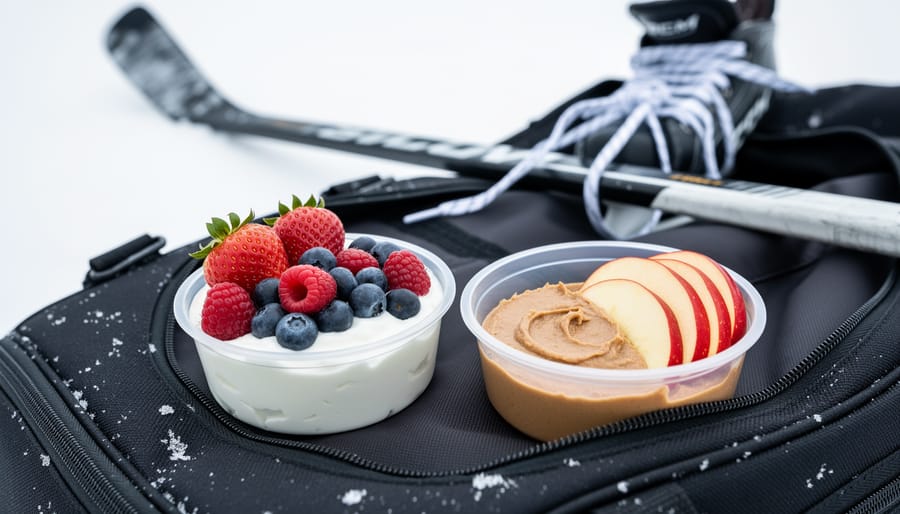
The two healthiest snacks for young hockey players are Greek yogurt with berries before practice and nut butter with apple slices after games. These combinations deliver exactly what growing athletes need: quick-digesting carbohydrates paired with protein for sustained energy and muscle recovery, wrapped in formats that travel well in a rink bag and require zero preparation at 5:30 AM.
Youth hockey schedules demand snacks that work as hard as your player does. Between early morning ice times, back-to-back weekend tournaments, and the 45-minute drive home after a late practice, you need portable nutrition that supports performance without the sugar crash or the mess. Research consistently shows that young athletes who fuel properly before activity maintain better focus and endurance on the ice, while post-activity protein intake within 30 to 60 minutes accelerates muscle repair and reduces next-day soreness.
These two snack pairings aren’t random picks. They represent a strategic approach to pre- and post-activity nutrition, each serving a distinct purpose in your athlete’s development. Greek yogurt’s high protein content (typically 15-20 grams per serving) combined with the natural sugars in berries provides immediate fuel without weighing down a young stomach before skating. The nut butter and apple combination reverses the ratio, offering healthy fats and sustained-release energy that helps rebuild what a hard practice or game just depleted.
The practical reality matters just as much as the nutrition science. Both options survive temperature fluctuations in a gear bag, require minimal cleanup, and cost significantly less than pre-packaged sports nutrition products that often contain unnecessary additives and excessive sugar.
Why These Two Snacks Made the Cut
Choosing the right snacks for young hockey players isn’t about trends or what’s easiest to grab at the store. These two options, Greek yogurt with berries and nut butter with apple slices, emerged from a rigorous evaluation process that prioritizes what actually matters for developing athletes. Hockey demands a unique combination of explosive power for quick starts and shooting, sustained endurance through three periods, and rapid recovery between shifts. Young bodies building muscle, bone, and neural pathways need fuel that supports growth while delivering performance when it counts.
The selection criteria centered on practical realities parents and coaches face daily:
- Macronutrient balance combining protein, carbohydrates, and healthy fats to fuel all energy systems
- Portability that survives rink bags, temperature fluctuations, and hurried transitions between school and ice time
- Shelf stability or simple refrigeration needs that don’t require complicated storage
- Natural appeal to young athletes who won’t eat what tastes like medicine, no matter how nutritious
- Timing flexibility to work as pre-practice fuel or post-game recovery, depending on the schedule
- Evidence-based nutritional benefits supported by sports science research, not marketing claims
Both snacks deliver complete nutrition in formats that respect how youth hockey actually works. A player can eat Greek yogurt with berries 75 minutes before stepping on the ice without feeling sluggish or hungry. Nut butter with apple slices fits in a side pocket and provides the protein-carbohydrate window crucial for recovery within 30 minutes of leaving the ice. Neither requires cooking skills, special equipment, or ingredients that spoil if practice runs late. These aren’t just healthy options, they’re practical solutions that support holistic development by teaching young athletes that proper nutrition enhances everything they’re working to build on the ice.
1. Greek Yogurt with Berries: The Pre-Practice Power Combo
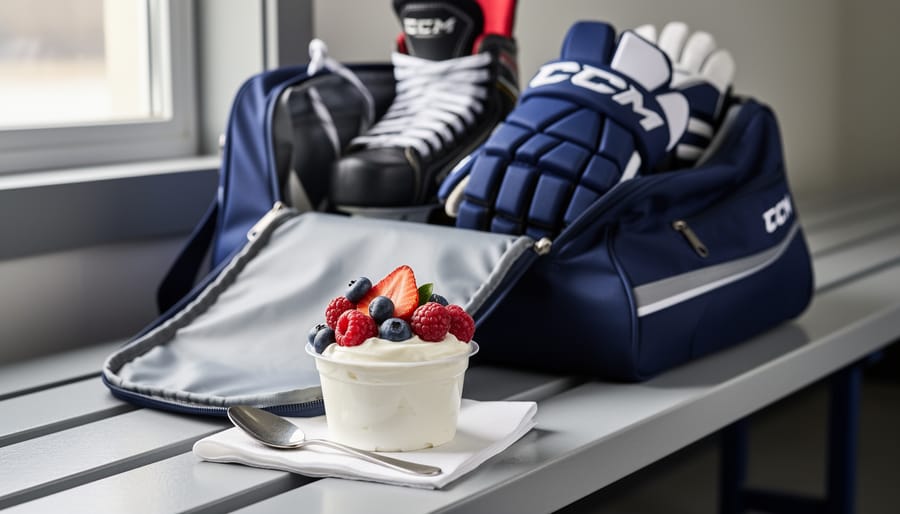
Greek yogurt paired with fresh berries delivers exactly what a young hockey player’s body needs in the hour before stepping onto the ice. This combination addresses three critical pre-practice requirements: fast-acting carbohydrates for immediate energy, high-quality protein to prepare muscles for intense work, and nutrients that support both performance and recovery.
The protein in Greek yogurt stands out because it contains roughly twice the amount found in regular yogurt, typically 15-20 grams per serving. This protein comes primarily from casein and whey, which young athletes digest at different rates. The whey protein begins working quickly to support muscle function during practice, while casein provides a slower, sustained release that continues supporting muscle tissue throughout the session. For developing bodies still building muscle mass and strength, this dual-action protein source makes a measurable difference in how players feel during explosive skating drills and physical play.
Berries bring the carbohydrate component that fuels high-intensity hockey movements. Blueberries, strawberries, and raspberries contain natural sugars that convert to usable energy faster than complex carbohydrates, yet they don’t trigger the sharp blood sugar spike and crash that candy or juice boxes cause. The fiber in whole berries moderates sugar absorption, giving players steady energy rather than a brief burst followed by fatigue. Beyond energy, berries pack antioxidants like anthocyanins and vitamin C that help reduce the inflammation young bodies experience from repeated impacts and explosive movements on ice.
Greek yogurt’s probiotic content supports digestive health, which matters more than parents might expect. A healthy gut improves nutrient absorption from all foods players eat, strengthens immune function during long winter hockey seasons, and helps young athletes feel comfortable rather than bloated during practice. Players with settled stomachs skate harder and focus better.
Portion sizes should scale with age and body size. Players aged 6-9 do well with a 5-6 ounce yogurt container and half a cup of berries. Athletes aged 10-13 can handle 6-8 ounces of yogurt with three-quarters to a full cup of berries. Teenagers 14 and up often need 8 ounces or more of yogurt with a generous cup of berries, especially before intense practices or games.
Making this snack appealing comes down to letting young players have some control. Let them choose their preferred berry or try a mix. Some kids prefer their yogurt plain with berries stirred in, while others like a small drizzle of honey. Avoid pre-sweetened yogurts loaded with added sugars, these undermine the blood sugar stability this snack provides. If vanilla or fruit-flavored Greek yogurt helps a reluctant eater accept the snack, choose versions with minimal added sugar rather than fighting for plain yogurt and getting nothing eaten.
The timing window matters because digestion takes energy and blood flow. Eating too close to ice time leaves food sitting heavy in the stomach, while eating too early means energy peaks before practice starts. That 60-90 minute sweet spot gives the body time to break down the yogurt and berries, absorb the nutrients, and have energy available right when skating begins.
2. Nut Butter with Apple Slices: The Post-Game Recovery Essential
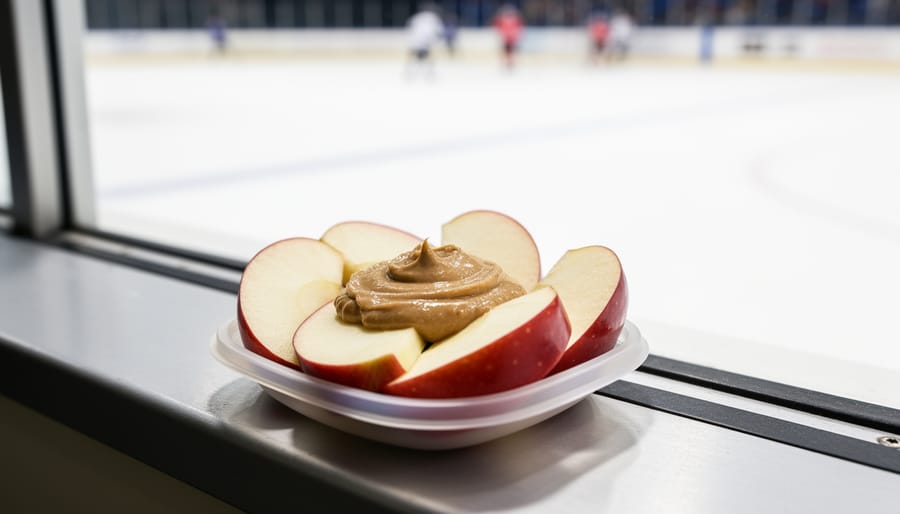
After the final buzzer, when young players are tired and hungry, nut butter paired with apple slices delivers exactly what their bodies need to recover and rebuild. This combination works because it hits multiple nutritional targets simultaneously: the natural sugars in apples replenish depleted glycogen stores, the protein in nut butter repairs muscle tissue stressed during gameplay, and the healthy fats provide sustained energy that prevents the post-game crash many parents notice an hour after leaving the rink.
The science behind this pairing is straightforward. A medium apple with two tablespoons of nut butter provides roughly a 3:1 ratio of carbohydrates to protein, which research shows is optimal for recovery in young athletes. The apple’s fiber slows sugar absorption, preventing blood sugar spikes and subsequent drops that can leave kids irritable or overly fatigued. Meanwhile, the monounsaturated fats in almond or peanut butter support hormone production critical for growth and development, considerations that matter as much as immediate recovery when we’re thinking about national team development pathways and long-term athletic potential.
Portion guidance varies by age: younger players (6-10 years) need about half a medium apple with one tablespoon of nut butter, while older youth athletes (11-15 years) can handle a full apple with two tablespoons. Pack sliced apples in an airtight container with a squeeze of lemon juice to prevent browning, and portion nut butter into small reusable containers rather than bringing a full jar to the rink.
Allergy considerations are non-negotiable in team settings. If even one player has a tree nut or peanut allergy, switch everyone to sunflower seed butter, it provides comparable nutrition without the risk. Communicate with all parents before team events, and establish a dedicated space in the locker room for allergy-safe snacks. This teaches young athletes to be mindful of teammates’ needs, reinforcing the collaborative mindset that defines successful hockey programs.
Transportation requires minimal effort. Keep a small cooler bag in your vehicle with reusable ice packs, though nut butter and apples remain safe at room temperature for several hours. Pre-slice apples the morning of games, and pack everything in compartmentalized containers that won’t leak in a hockey bag already filled with sweaty gear.
Making These Snacks Work for Your Team
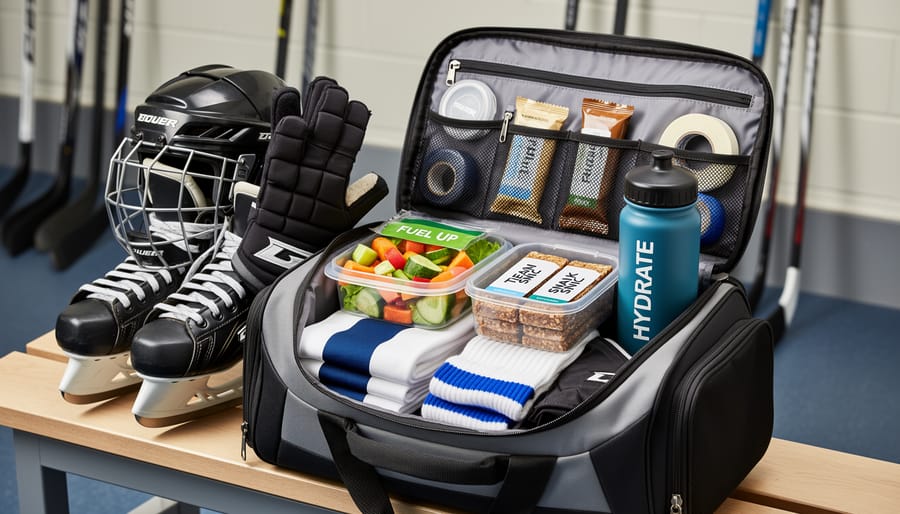
Turning nutrition knowledge into habit requires planning and consistency. Start by prepping ingredients on Sunday evenings: portion individual servings of yogurt into small containers, wash and slice berries, and divide nut butter into small jars or silicone cups. Keep apple slices fresh by storing them with a splash of lemon juice. This 30-minute investment makes weekday mornings seamless.
Budget concerns shouldn’t block better nutrition. Large tubs of plain Greek yogurt cost less per serving than individual cups, and frozen berries deliver the same nutrients at half the price of fresh. Generic or store-brand nut butters match the protein content of premium options. When introducing these snacks in team or school settings, frame them as performance tools, not restrictions. Explain how Greek yogurt with berries fuels explosive skating in the first period, or how nut butter with apple slices speeds muscle repair after a hard practice.
Address allergies proactively. If tree nuts pose risks, sunflower seed butter provides comparable healthy fats and protein. Clearly label all shared snacks and establish a nut-free zone if needed. Assign older players responsibility for packing their own rink bags, teaching them to balance school and practice demands alongside proper fueling. This ownership build player character and self-discipline that extends far beyond the rink. When young athletes understand why they eat these snacks, not just what to eat, nutrition becomes a competitive advantage they control themselves.
The Complete List
This combination delivers complete nutrition for young hockey players heading to the rink. Greek yogurt provides 15-20 grams of protein per serving to support muscle development and recovery, while the live probiotics promote digestive health that keeps players feeling their best. Fresh or frozen berries add fast-acting carbohydrates for immediate energy, plus antioxidants that help reduce inflammation from intense training. The natural sweetness makes this snack appealing to kids who might resist healthier options.
Pack this in an insulated lunch bag with an ice pack, keeping it between 35-40°F until your player eats it 60-90 minutes before stepping on the ice. For younger players (ages 8-10), aim for a 6-ounce yogurt container with half a cup of berries. Older athletes (11-14) can handle 8 ounces of yogurt with a full cup of fruit. This snack stabilizes blood sugar, preventing the energy crashes that come from sugary alternatives, and gives developing bodies the building blocks they need for strength and endurance.
Within 30 minutes after leaving the ice, this pairing jumpstarts recovery when young muscles need it most. Two tablespoons of almond, peanut, or sunflower seed butter deliver healthy fats that satisfy hunger and protein that repairs muscle tissue broken down during play. Apple slices contribute natural sugars to replenish glycogen stores and fiber to prevent blood sugar spikes. The crunch factor appeals to tired players who need something satisfying but not heavy.
Pre-slice apples at home and toss them with a splash of lemon juice to prevent browning, storing them in an airtight container. Pack nut butter in a small jar or individual packets for convenience. This combination supports the recovery window when the body absorbs nutrients most efficiently, helping your player bounce back faster for the next practice. For teams with allergies, sunflower seed butter provides the same benefits without triggering nut restrictions. These two snacks form the foundation of smart hockey nutrition, though families looking to expand their options can explore more healthy snacks that follow the same evidence-based principles.
Common Questions About Healthy Snacking for Young Hockey Players
Parents and coaches navigating youth hockey nutrition often face similar practical concerns. These questions come up regularly in rink lobbies and team group chats, and understanding the answers makes implementing healthier snack choices much easier.
How much should a young player eat before practice?
Aim for a small snack of 100-200 calories about 60-90 minutes before ice time, roughly one cup of Greek yogurt with a half-cup of berries for most kids aged 8-14. Younger players may need slightly less, while teenagers often benefit from the higher end of this range.
What if my child doesn’t like yogurt or has a nut allergy?
Greek yogurt can be swapped for cottage cheese or a dairy-free alternative like coconut yogurt if lactose is the issue. For nut allergies, sunflower seed butter provides similar healthy fats and protein without the allergen risk, and works perfectly with apple slices.
Can these snacks replace a full meal?
No, these are designed as strategic snacks to fuel practice and recovery, not meal replacements. Young athletes still need balanced breakfasts, lunches, and dinners with adequate protein, whole grains, vegetables, and healthy fats to support growth and development.
How do I handle team snack rotations with healthier options?
Communicate with other parents early in the season about nutrition goals, share simple recipes, and offer to organize a rotation schedule featuring these two snacks alongside other wholesome choices. Most families appreciate the guidance once they see how manageable it is.
Store-bought versions work fine when you check labels for added sugars and unnecessary ingredients. Plain Greek yogurt in individual cups paired with fresh or frozen berries requires zero preparation, and single-serve nut butter packets with pre-sliced apples (or whole apples and a small knife) travel beautifully in rink bags. The key is consistency and timing, not homemade perfection.
Greek yogurt with berries and nut butter with apple slices aren’t just convenient snacks. They’re foundational fuel that directly supports your young athlete’s performance, recovery, and long-term development both on and off the ice. When you prioritize nutrient-dense choices like these, you’re teaching discipline, building healthy habits, and giving your player the physical resources to compete at their best.
Start with these two reliable options. Pack them consistently. Watch how proper nutrition translates into sustained energy, sharper focus during drills, and faster recovery between games. These snacks work because they respect the science of sports nutrition while fitting the real-world demands of hockey schedules and young palates.
You’re not just feeding your child before practice. You’re investing in a well-rounded athlete who understands that excellence requires attention to every detail, including what goes into their body. That mindset, built one snack at a time, extends far beyond the rink into every aspect of their education and personal growth.