
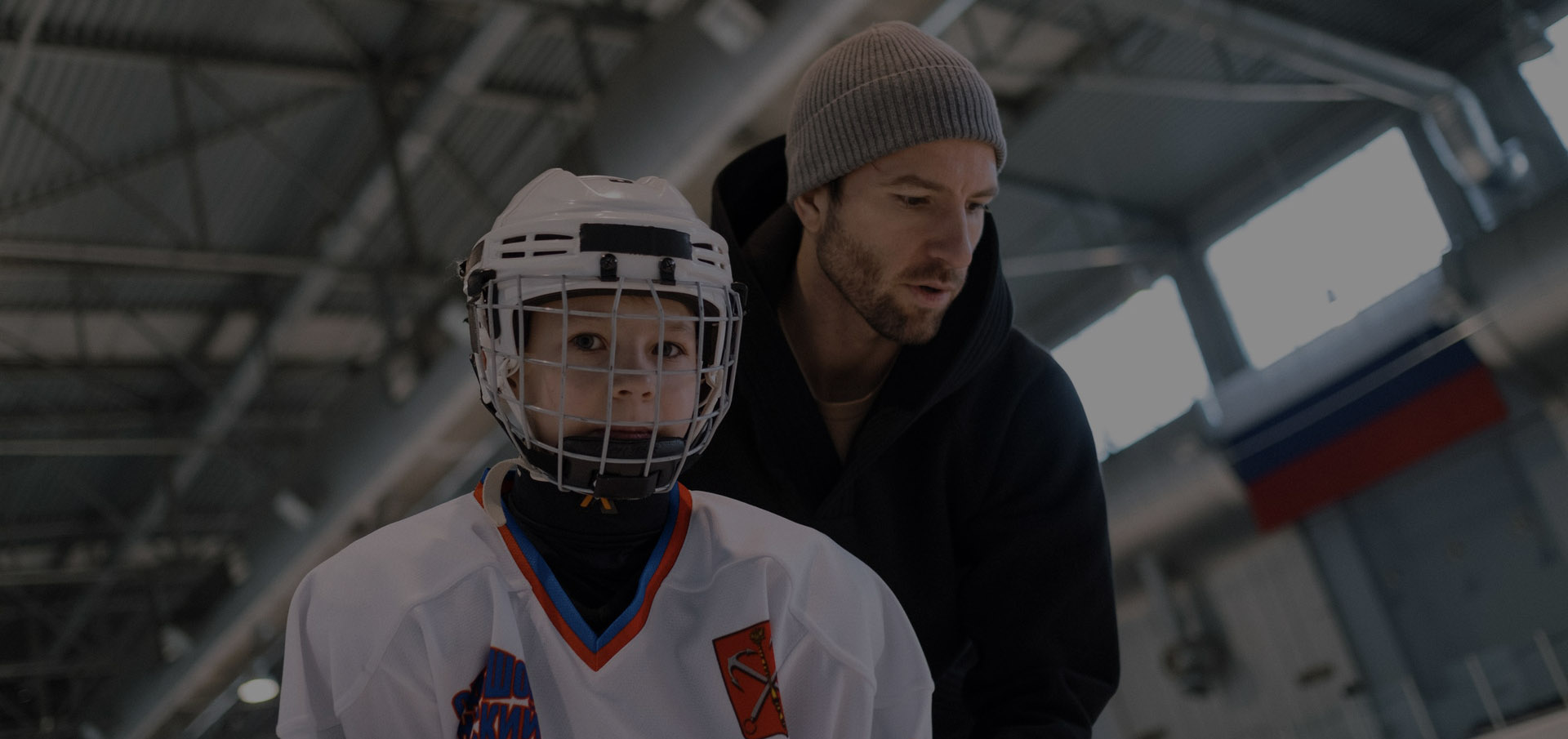
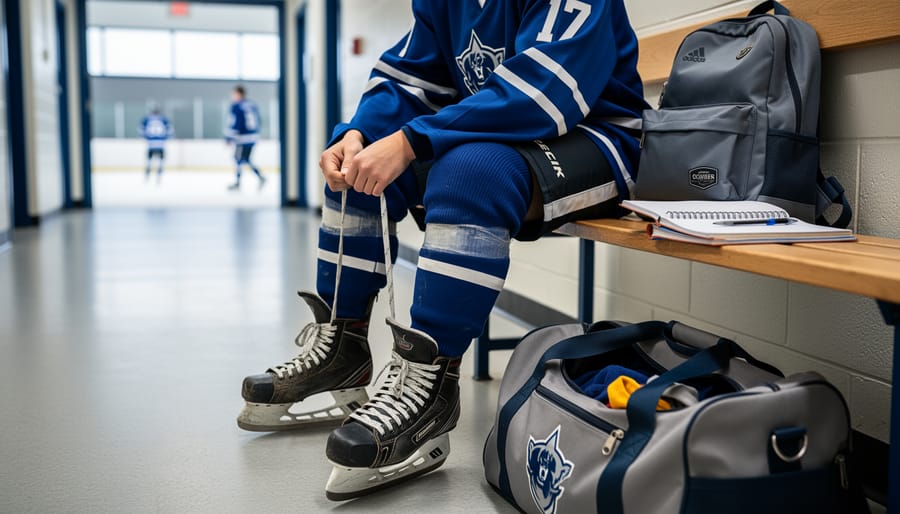
Hockey life means learning to thrive across three interconnected arenas: the rink, the classroom, and home. For junior hockey players and their families, success isn’t measured solely by goals scored or games won, but by the ability to integrate intense practice schedules, academic responsibilities, and meaningful family connections into a sustainable rhythm that supports long-term development.
The reality is demanding. As hockey life shifts gears each season, young athletes face a unique challenge that extends far beyond any single game. Early morning ice times, weekend tournaments, strength training sessions, team meetings, and travel commitments create a packed schedule that can easily overwhelm students and families alike. Yet thousands of junior players navigate this path successfully each year, not by sacrificing one priority for another, but by building systems that honor all three pillars equally.
Research consistently shows that athletes who maintain balance across sports, academics, and personal life demonstrate higher resilience, better decision-making skills, and longer-term success both on and off the ice. The key lies in recognizing that hockey life isn’t about choosing between being a dedicated athlete, a strong student, or a present family member. It’s about developing the organizational skills, communication habits, and support structures that allow young players to excel in all areas simultaneously.
This article provides a comprehensive framework for understanding what hockey life truly demands and offers evidence-based strategies to help players, parents, coaches, and billets create an environment where young athletes can develop holistically. The goal is simple: ensuring the junior hockey experience remains positive, sustainable, and genuinely enriching for everyone involved.
Understanding Hockey Life Beyond the Ice
When young players and their families talk about “hockey life,” they’re describing something much bigger than game days and practice sessions. It’s the entire ecosystem that surrounds a junior hockey player, the early morning drives, the packed schedules, the meals eaten in the car, the homework completed in arena lobbies, and the family plans rearranged around tournament weekends. Hockey life is the lived experience of making this sport a central part of your family’s world.
The arc of every player’s hockey life extends far beyond any single youth hockey game. It encompasses the relationships built with teammates who become like siblings, the lessons learned from coaches who influence character development, and the discipline required to balance athletic ambitions with academic responsibilities. For many families, hockey life means welcoming billets into their homes or, conversely, sending their own children to live with host families in pursuit of better competitive opportunities. It involves parents coordinating carpools, siblings learning patience during long weekends at rinks, and players discovering who they are both on and off the ice.
Mid-August often marks when hockey life begins to shift gears. Summer’s relative freedom gives way to structured training schedules, team placements are announced, and the reality of the upcoming season becomes concrete. Families start mapping out the fall calendar, players return to their regular routines, and everyone involved prepares mentally and logistically for the commitments ahead. This transition period serves as an annual reminder that hockey life operates on its own rhythm, distinct from the conventional school year or typical family routines.
Understanding this broader context matters because it changes how we approach the sport itself. When we recognize that hockey life involves players, families, and extended support networks all working together, we can make more thoughtful decisions about training intensity, academic planning, and family time. The goal isn’t simply to create better hockey players, it’s to create an environment where young athletes can develop their skills while maintaining the balance necessary for long-term success and well-being.
The Three Pillars of Hockey Life Balance
Hockey life in junior hockey rests on three interconnected pillars: practice and training, academic performance, and family support. Understanding how these elements work together, not in isolation, creates the foundation for sustainable athletic development that extends far beyond any single youth hockey game.
Think of these pillars like the legs of a three-legged stool. When one weakens, the entire structure becomes unstable. A player who excels on the ice but struggles academically may find doors closing for future opportunities. Similarly, intense training that doesn’t account for family time can create stress that ultimately undermines performance. Each pillar depends on and reinforces the others.
Research in athlete development consistently shows that young players who maintain balance across these three areas demonstrate better long-term outcomes. They’re less prone to burnout, more likely to continue playing at higher levels, and develop life skills that serve them whether or not hockey becomes their career. The arc of a player’s hockey life extends far beyond their junior years, making this balanced approach essential rather than optional.
The challenge lies in recognizing that balance doesn’t mean equal time allocation. During certain periods, practice intensity increases. Exam weeks demand more academic focus. Family events deserve priority. What matters is that no pillar gets consistently neglected, and that players, families, and billets work together to monitor and adjust as needed.
This framework acknowledges reality: junior hockey is demanding. But it also provides a clear lens for decision-making. When evaluating whether to add another training session, accept a tournament invitation, or adjust schedules, ask how the choice affects all three pillars.
Practice and Training: Building Skills Without Burnout
Quality Over Quantity in Practice Time
The relentless pursuit of ice time can paradoxically undermine player development. Research consistently shows that deliberate practice targets improvement in specific skills far more effectively than simply accumulating hours on the ice. A focused 45-minute session with clear objectives and corrective feedback produces more growth than two unfocused hours of repetitive drills.
Effective junior coaching recognizes this distinction. Coaches who design practices around deliberate skill acquisition, breaking down complex movements, providing immediate feedback, and adjusting difficulty to challenge without overwhelming, create environments where players develop faster with less burnout risk. Parents can support this approach by asking coaches about specific practice goals rather than simply counting sessions per week.
The warning signs of quantity-over-quality thinking are straightforward: players going through motions without engagement, repeated mistakes without correction, or fatigue that prevents proper technique. When practice becomes a checkbox exercise rather than purposeful training, it’s time to reassess. Three well-structured sessions with mental and physical energy beat five exhausted repetitions every time.
This doesn’t mean elite training requires less effort. It demands smarter effort. Players should leave practice having genuinely improved something specific, not just tired. That clarity of purpose, knowing exactly what you’re working on and why, transforms ice time from an endurance test into actual development.
Recovery as Part of the Training Plan
Recovery isn’t the opposite of training, it’s where the training actually works. When young hockey players push through practice after practice without adequate rest, they’re not building resilience; they’re courting injury, burnout, and diminished performance. The body adapts and grows stronger during recovery periods, not during the ice time itself.
Sleep stands as the most powerful recovery tool available to junior athletes. Research consistently shows that sleep supports athletic development through muscle repair, cognitive function, and immune system strengthening. Teen hockey players need 8-10 hours nightly, not as a luxury, but as a performance requirement. Families who treat bedtime as negotiable often see the consequences in slower reaction times, increased mistakes, and declining grades.
Mental breaks matter just as much as physical rest. A player who thinks about hockey every waking hour isn’t more dedicated, they’re headed for psychological exhaustion. Building in time for friends, hobbies, and simple downtime creates the mental space young athletes need to stay passionate about the game. This applies whether they’re in team practices or private training sessions.
Smart coaches and parents build recovery directly into the training calendar. This means scheduled rest days, lighter practice loads during exam periods, and strategic breaks between intense competition blocks. Recovery isn’t what happens when you’re not training hard enough, it’s what allows you to train hard successfully.
School: The Foundation That Supports Hockey Dreams
When Hockey and School Collide: Creating a Plan
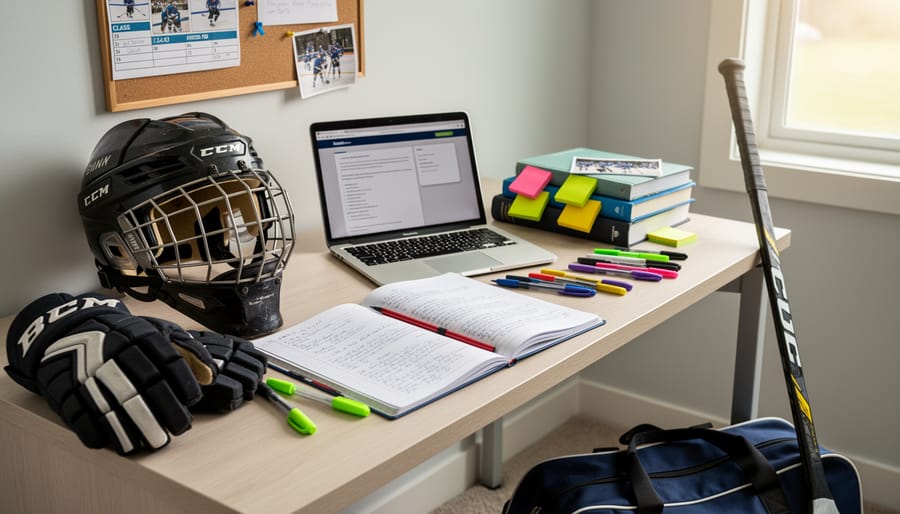
Conflicts between hockey and school are inevitable. A tournament scheduled during exam week, a championship game falling on the day of a major presentation, or an away series that means missing three consecutive school days, these situations test every junior hockey family. The key isn’t avoiding these conflicts entirely; it’s having a clear strategy for navigating them.
Start by creating a season-long academic calendar at the beginning of the hockey year. Mark all major tests, project deadlines, exam periods, and significant school events. Share this calendar with your coach as early as possible. Most coaches appreciate advance notice and can factor academic commitments into their planning when given sufficient lead time. Similarly, provide your teachers with the team’s competition schedule, highlighting periods of travel or particularly demanding hockey commitments.
When conflicts arise, communicate immediately with both your teacher and your coach. Explain the situation honestly, propose solutions, and ask for guidance rather than making assumptions. Teachers often show flexibility when they see a student taking initiative and demonstrating genuine commitment to both academics and athletics. Request assignments in advance when you know you’ll miss school, and establish clear deadlines for make-up work.
Create contingency plans for predictable scenarios. Identify study times during long bus trips. Establish relationships with classmates who can share notes from missed classes. Build buffer time into your schedule for unexpected academic demands rather than assuming everything will proceed perfectly according to plan.
Academic Performance as an Indicator of Overall Balance
Academic performance serves as one of the most reliable early warning systems for detecting imbalance in a junior hockey player’s life. When grades begin to slip, it typically signals that something in the three-pillar framework isn’t working. The student-athlete may be sacrificing sleep to accommodate both homework and training, rushing through assignments between practices, or simply feeling too overwhelmed to focus effectively during class.
Research consistently shows that cognitive function, memory consolidation, and learning capacity all decline when young athletes are overtired or overstressed. A drop in academic performance rarely happens in isolation. It usually appears alongside other warning signs: increased irritability, persistent fatigue, decreased enthusiasm for hockey itself, or physical complaints like headaches.
Parents should monitor report cards and maintain regular communication with teachers, but numbers tell only part of the story. Notice whether your player is engaged during homework time or just going through the motions. Are they retaining information from one week to the next? Can they explain what they learned today?
Coaches can support academic success by asking about school regularly, adjusting practice intensity during exam periods, and celebrating educational achievements alongside athletic ones. When a player’s grades decline, resist the urge to simply add more study hours to an already packed schedule. Instead, examine the entire picture. What needs to change across practice, school, and family time to restore sustainable balance? Sometimes the solution involves fewer hockey commitments, not additional academic pressure. The goal remains developing well-rounded individuals, not just skilled hockey players.
Family: The Support System Behind Every Player
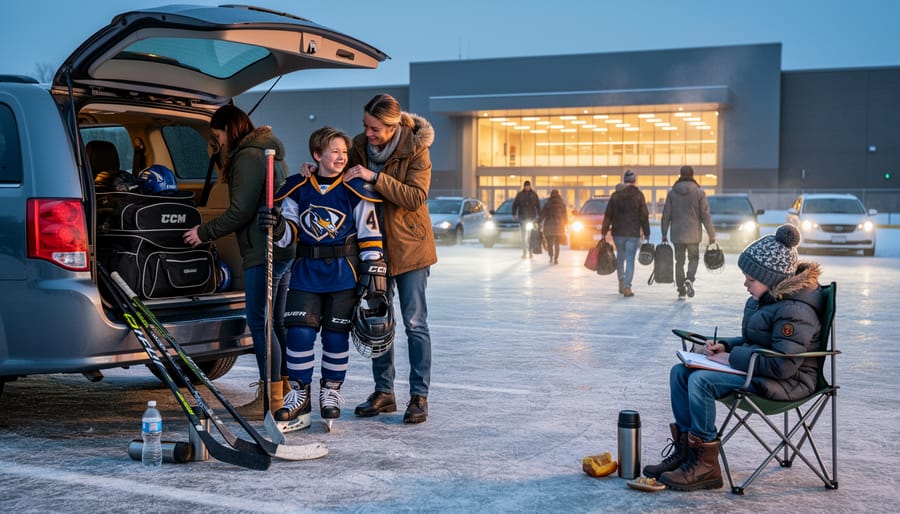
Behind every junior hockey player stands a network of family members whose own lives revolve around practices, games, tournaments, and the countless logistics that define hockey life. Parents become schedulers, drivers, nutritionists, equipment managers, and emotional anchors, often juggling multiple roles simultaneously while maintaining their own work and personal commitments. The financial investment extends beyond registration fees to include travel costs, equipment replacements, private coaching, and sometimes accommodations when players join teams far from home. These commitments reshape family routines, vacation plans, and weekend schedules in ways that affect everyone in the household.
Siblings of junior hockey players experience hockey life through a different lens. They attend countless games in cold arenas, adapt to family dinners scheduled around practice times, and sometimes feel the weight of reduced parental attention during intense hockey seasons. Acknowledging this reality allows families to create intentional moments for siblings, whether that’s one-on-one time with a parent during a road trip, involving them in the hockey experience by letting them choose what to wear to games, or protecting certain family traditions that remain hockey-free zones. The healthiest hockey families recognize that supporting one child’s athletic journey shouldn’t mean neglecting the needs and interests of others.
For players who billet with host families, the definition of family expands beyond blood relations. Billets provide more than housing, they create a home environment that supports academic success, emotional stability, and personal growth during a developmentally critical period. The relationship between billet families, birth families, and players requires clear communication about expectations, regular check-ins about the player’s wellbeing, and mutual respect for different household cultures. When these relationships work well, they become lifelong connections that enrich the hockey experience far beyond the playing years.
Maintaining family connections amid demanding hockey schedules requires intentionality. Weekly family dinners, device-free conversations during car rides to the rink, and annual vacations that aren’t hockey-related help preserve the bonds that matter most. Hockey should enhance family life, not replace it.
Practical Aspects of Hockey Life: From Outfit Choices to Nutrition

Hockey life isn’t just about what happens on the ice. The day-to-day realities, from what players wear to games to how they fuel their bodies, form the foundation that makes everything else possible.
Game Day Attire and First Impressions
What young players wear to the rink matters more than many families initially realize. Arriving in team-issued tracksuits or neat casual clothing demonstrates professionalism and respect for the sport. Players should dress comfortably enough for pre-game routines while looking put-together. Jeans and a team hoodie work perfectly. Avoid anything too baggy that might catch on equipment, and skip the expensive streetwear that’ll end up smelling like hockey gear. The goal is practical pride in representation, not a fashion show.
Nutrition That Supports Performance and Growth
Young athletes need fuel, but hockey life often means eating on the go between school, practice, and games. Pack protein-rich snacks like trail mix, cheese sticks, or nut butter sandwiches that don’t require refrigeration. Hydration starts hours before stepping on the ice, not during warm-ups. A water bottle should be as essential as skates. For tournament weekends, prepare simple meals in advance rather than relying on arena concessions or fast food for every meal. Growing bodies playing a demanding sport can’t run on pizza and energy drinks alone.
Equipment Management as Life Skill
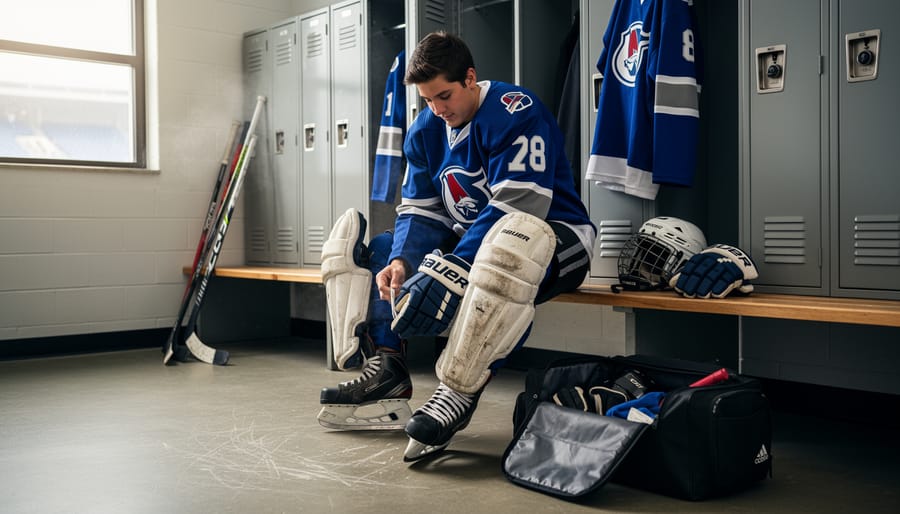
Hockey gear requires constant attention. Establishing a routine for airing out equipment after every use prevents both odors and bacterial growth. Players old enough to tie their own skates should learn to maintain their equipment, sharpen blades before they’re desperately dull, and spot issues like loose rivets early. This isn’t just about gear longevity, it’s about developing responsibility and awareness that transfers to other areas of life.
The logistics of hockey life demand organization. Gear bags packed the night before. School assignments completed ahead of travel weekends. Shared family calendars that prevent scheduling conflicts. These practical systems don’t diminish the magic of the sport; they protect it.
Creating Your Family’s Hockey Life Philosophy
Every family’s hockey journey is unique, shaped by individual values, circumstances, and goals. Rather than defaulting to what everyone else seems to be doing or chasing the loudest voices at the rink, creating a deliberate philosophy for your family’s hockey life provides a compass for decisions big and small.
Start by asking the fundamental question: why are we doing this? For some families, hockey provides structure, discipline, and physical fitness. For others, it teaches resilience and teamwork. Many value the friendships and community. Knowing your primary reasons helps you evaluate opportunities and sacrifices through the right lens. When a tournament conflicts with a family event or an expensive showcase promises exposure, your answer depends on whether those align with your actual priorities or just feel like what you’re “supposed” to do.
Building your family’s hockey life philosophy requires honest conversation and periodic reflection. Consider working through these steps together:
- Define your non-negotiables: Identify what you won’t compromise, whether that’s academic standards, family dinners, religious commitments, or financial limits.
- Establish your hockey goals: Be specific about what success looks like, is it skill development, college opportunities, or simply enjoying the sport?
- Set boundaries around time and money: Decide in advance how many hours per week and dollars per year you’ll commit, then stick to those limits.
- Create decision criteria: Develop a framework for evaluating new opportunities (tournaments, camps, team changes) against your established priorities.
- Schedule regular check-ins: Meet quarterly as a family to assess whether your current path still aligns with your goals and values.
Evidence-based decision-making means looking beyond promises and pressure. Research actual outcomes rather than accepting claims at face value. Ask for data on where former players ended up, not just success stories. Talk to families a few years ahead of you about what they wish they’d known.
Rejecting a win-at-all-costs mentality doesn’t mean lacking competitive drive. It means recognizing that cutting corners on education, encouraging young athletes to avoid vaping and other harmful choices, or sacrificing mental health for wins produces hollow victories. The arc of every player’s hockey life extends far beyond any single game or season, and decisions made at twelve years old shouldn’t foreclose options at eighteen.
Your philosophy might evolve as your player develops and circumstances change. That’s not failure; it’s responsiveness. The goal isn’t perfect consistency but intentionality, ensuring that hockey enriches your family’s life rather than consuming it entirely.
Hockey life, when approached with intention and balance, becomes something far greater than the sum of its practices, games, and travel schedules. It’s a journey that shapes character, builds resilience, and creates memories that last well beyond the final buzzer. The arc of every player’s hockey life extends far beyond any single youth hockey game, it encompasses the friendships forged in locker rooms, the lessons learned from both victories and defeats, and the quiet moments of growth that happen when no one’s keeping score.
Your family’s approach to hockey life will look different from anyone else’s, and that’s exactly as it should be. Some players thrive with intensive training schedules while maintaining academic excellence. Others need more breathing room to stay balanced. Some families embrace the travel and community aspects wholeheartedly, while others set firm boundaries to protect other priorities. There’s no single correct path, only the one that aligns with your values and supports your young athlete’s holistic development.
The magic happens when hockey enriches rather than overwhelms, when it complements education instead of competing with it, when it strengthens family bonds rather than straining them, and when it builds confidence that carries into every aspect of life. As mid-August shifts gears each year and hockey life ramps up once again, remember that you’re not just raising a hockey player. You’re raising a person who happens to love hockey, and that distinction makes all the difference.